
Archbishop Ussher and the age of the Earth
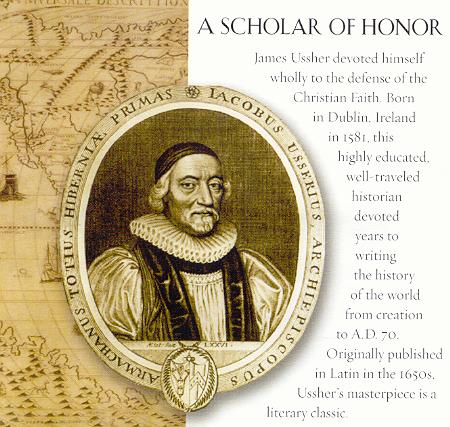
which is as good an introduction as any to my townsman who was one of the 17th Century’s
most influential churchmen and intellectuals.
James Ussher (1581-1656) was a Dubliner, Archbishop of Armagh, Primate of All
Ireland, and Vice-Chancellor of Trinity College in Dublin who was highly regarded
in his day as a churchman and as a scholar. Of his many works, his treatise on
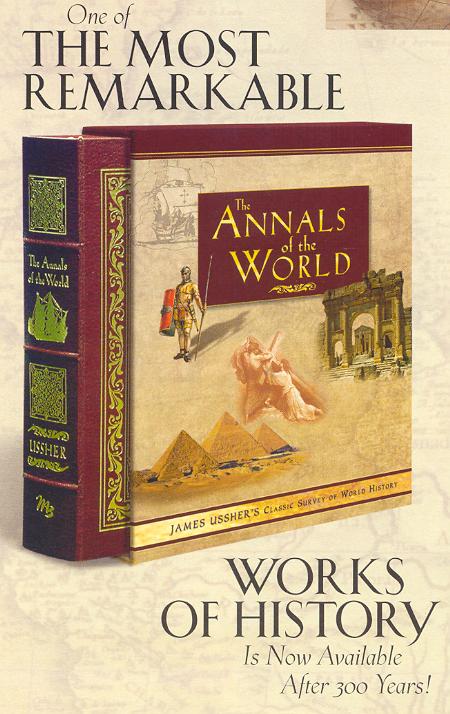
chronology has proved the most durable. Based on an intricate correlation of
Middle Eastern and Mediterranean histories and Holy writ, it was incorporated
into an authorised version of the Bible printed in 1701, and thus came to be
regarded with almost as much unquestioning reverence as the Bible itself.
Having established the first day of creation as Sunday 23 October 4004 BC, by
reference to the Books of Genesis, Ussher calculated the dates of other biblical
events, concluding, for example, that Adam and Eve were driven from Paradise on
Monday 10 November 4004 BC, and that the ark touched down on Mt Ararat on 5 May
2348 BC `on a Wednesday’.
Egypt when the hieroglyphs were decrypted which showed the Egyptian
Civilization was over 7,000 years old he did in the process succeed in
establishing much of the accepted chronology of our history. His calculation of
how many angels could fit on a pinhead (I jest not!) has not endured as much.
Such was the respect he was held in when he died as an Anglican Primate the
puritan Oliver Cromwell insisted he be buried will full ceremony in the Paul Chapel
of Westminster Cathedral.
Dublin is named after him and in a house there James Joyce set his long short
story “The Dead”
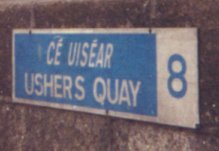 |
| Ushers Quay, Dublin |
Ussher chronology is a 17th-century chronology of the history of the world
formulated from a literal reading of the Bible. The chronology is sometimes
associated with young Earth creationism, which holds that the universe was
created only a few millennia ago by God as described in the first two chapters
of the Biblical book of Genesis.
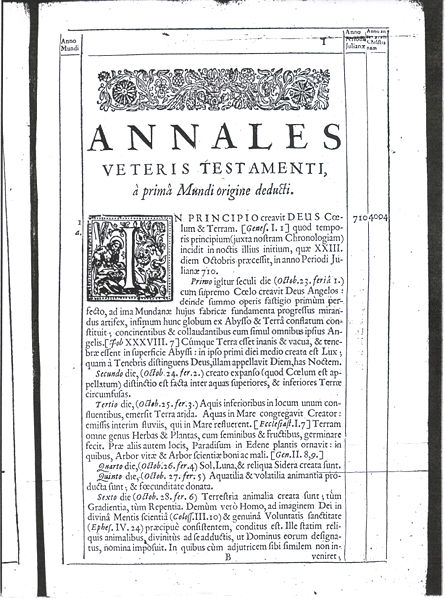
Testamenti, a prima mundi origine deducti, una cum rerum Asiaticarum et
Aegyptiacarum chronico, a temporis historici principio usque ad Maccabaicorum
initia producto.” (“Annals of
the Old Testament, deduced from the first origins of the world, the chronicle
of Asiatic and Egyptian matters together produced from the beginning of
historical time up to the beginnings of Maccabes”)
contribution to the long-running theological debate on the age of the Earth.
This was a major concern of many Christian scholars over the centuries.
under increasing attack from supporters of uniformitarianism, who argued that
Ussher’s “young Earth” was incompatible with the increasingly
accepted view of an Earth much more ancient than Ussher’s. It became generally
accepted that the Earth was tens, perhaps even hundreds of millions of years
old. Ussher fell into disrepute among theologians as well; in 1890, Princeton
professor William Henry Green wrote a highly influential article in Bibliotheca
Sacra entitled “Primeval Chronology” in which he strongly criticised
Ussher. He concluded:
chronological computation prior to the life of Abraham; and that the Mosaic
records do not fix and were not intended to fix the precise date either of the
Flood or of the creation of the world.”
he had to flee during the rebellion of 1641 which saw Kilkenny becoming the
capital of Ireland under the Catholic Confederation which allied itself with Charles
II and the Royalist cause during the English Civil War. For eight years until the
Cromwellian invasion of 1649 Ireland was effectively independent of England. Ussher
spent his years in exile first in London and then Oxford where he died living
with his daughter who married Dr. Luke Challoner.
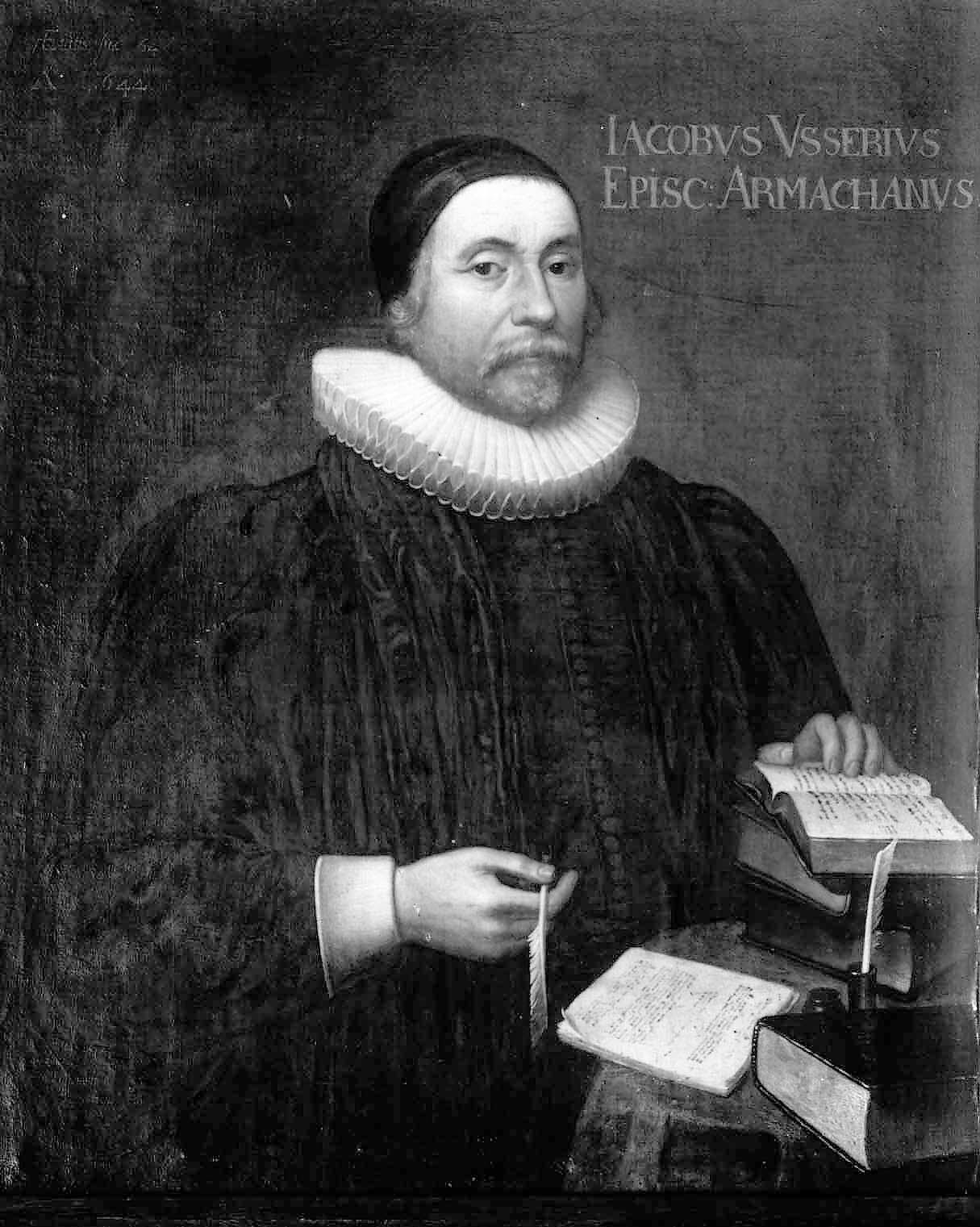 |
| Archbishop Ussher |
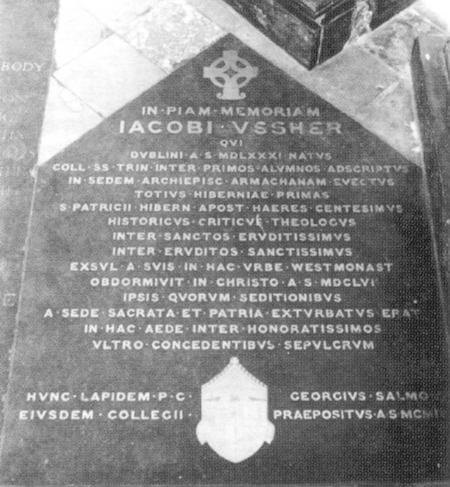
was Oliver Cromwell who ordered his burial in the chapel of St Paul in
Westminster Abbey and paid the funeral expenses. It is thought that this was
the only occasion at which the Anglican funeral service was read in the Abbey
during the Commonwealth period. The present Irish marble gravestone, with brass
lettering, was not put in place until 1904 and the Latin inscription was
written by Dr Gwynn (Regius Professor at Trinity College) and others. It can be
translated:
in 1581, entered among the first students of Trinity College, promoted to the
archiepiscopal see of Armagh, primate of all Ireland, the hundredth heir of St
Patrick the apostle of Ireland, historian, critic, theologian, most learned among
the holy, most holy among the learned, exiled from his own in this city of
Westminster, he fell asleep in Christ in 1656. He was expelled from his sacred
see and country by those same seditions which went on to grant him burial in
this church among the most honoured. This stone was placed by George Salmon,
Provost of the same college, 1904”
work whereas it is a transcription by many writers of the oral history of the Jewish
people over many years. He also tried to use the genealogy in the Bible to
extrapolate dates in history back to the “Great Flood” which
amplified his error. However, the great irony is that by addressing the core
question of Biblical Scholarship, The Creation, he also stimulated others to ask how old is
the Earth, a quest which laid the intellectual basis for the Theory of Evolution.
He was undoubtedly a great scholar and a great Dubliner who due to the vagaries of history
ended up being a prophet not without honour, save in his own country.
For more about James Joyce and “The Dead” house on Usher’s Island
(today’s spelling) in Dublin see;
http://daithaic.blogspot.com/2009/06/james-joyce-and-me.html
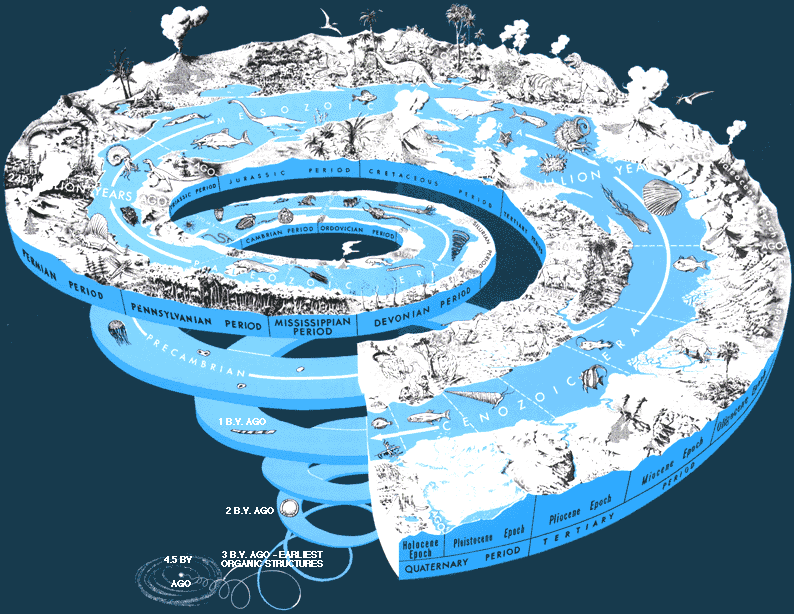 |
| Diagram showing the Age of the Earth |