
King’s Cross Station Reborn
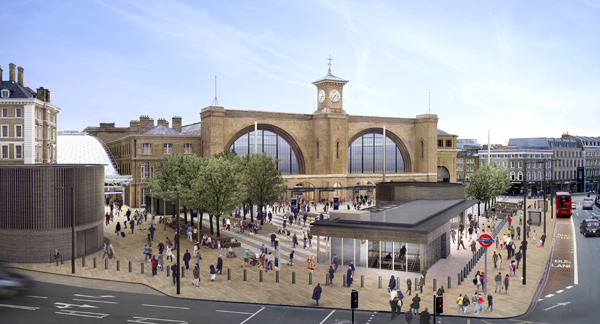 |
| King’s X – The new piazza |
King’s Cross, London has been one of those areas which has
been resistant to gentrification presenting at times an alarming and
threatening gateway to London for the unwary. Indeed the whole area has seemed
stubbornly resistant to improvement with the fine Victorian terraces and
squares in front of the station housing cheap boarding houses and the area
having a seedy reputation with an undercurrent of petty crime, drug dealing and
prostitution.
Well, this has changed out of all
recognition as the redevelopment of those two Great Dames of London’s railway
stations King’s Cross and St. Pancras has acted as a springboard for a massive
£2 Bn regeneration of the neighbourhood. This Christmas Day – when there were
no trains running and therefore no passengers – was chosen as the moment when
the last section of King’s Cross Station’s 1973 façade was demolished. It marks
the start of the last phase of development which will give the station a public
square for the first time in its 160-year history. The 7,000 square metre
square will open to the public in August 2013 representing a major project deliverable for Network Rail which is responsible for Britain’s Rail Infrastructure.
there for over 40 years (!), means the
redevelopment of the Grade I listed King’s Cross Station to a design by John McAslan and Partners, is almost complete,
with construction of
the new Southern Square under way. Major
remodelling of the station has delivered improved passenger facilities,
rationalised operational activities and significantly increased retail
opportunities at the station. The redevelopment has played a key role in the
wider transformation of the King’s Cross area – infrastructure, social and
commercial changes now connect the station with the substantial King’s Cross
Central scheme north of the station, as well as improved interchange links with
the London Underground, St. Pancras Station, Thameslink services, taxis and
buses.
mass with the reincarnation of St. Pancras as the Eurostar Terminal to Paris,
Brussels and beyond. Now the final piece of the jigsaw is in place as the new
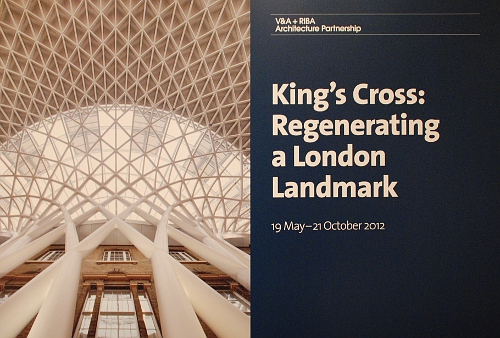
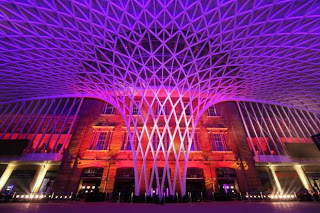
concourse at one of the UK’s best-known railway stations is officially opened.
The £550 million work at King’s Cross in London represents the biggest
transformation in its 160-year history. The shell-shaped glass and steel
building will provide three times the space of the current station concourse.
Taken in conjunction with the refurbished Tube station the new Kings Cross will
offer the millions of passengers who use it a far better experience. There will
be better facilities, new links with the Tube, better links to St Pancras
station, more shops and restaurants, larger destination boards and clearer
station announcements.
to connect what are in effect seven transport hubs which form Kings Cross / St
Pancras. Its overriding focus has been the critical demands of the
ever-increasing crowds moving between the various components of the King’s
Cross area – between St Pancras and King’s Cross, between the suburban train
sheds of platforms 9-11 and the Underground station, between platforms 0-8 and
everywhere else. There are 100,000 people moving between these places at peak
times of the day, and to handle them a new concourse was needed for people to
circulate, wait and move on.
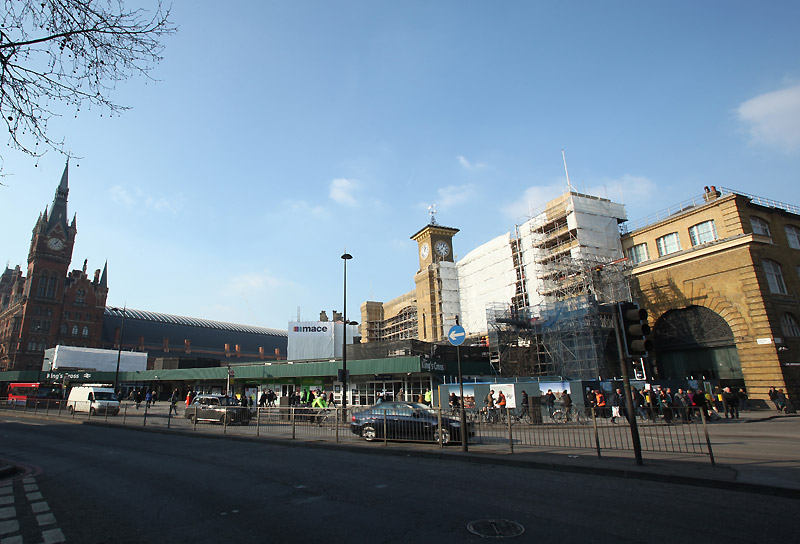 |
| The “temporary” canopy which lasted over 40 years has now been demolished |
built for the Great Northern Railway to serve Yorkshire, the north-east of
England and Scotland. The engineer was Joseph Cubitt and the station was
designed by his older brother, Lewis Cubitt. The station was built in 1851 – 52
on the site of the London Smallpox Hospital. When it opened it was the largest
station in England and included coal stores, a six-storey granary and stabling
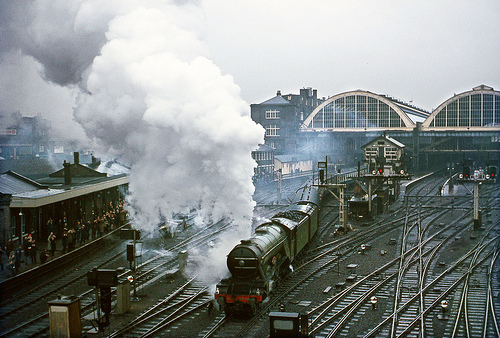
for 300 horses. King’s Cross has always been noted more for its trains than its
buildings – the ‘Flying Scotsman’, Britain’s most famous train, made her last
journey from here.
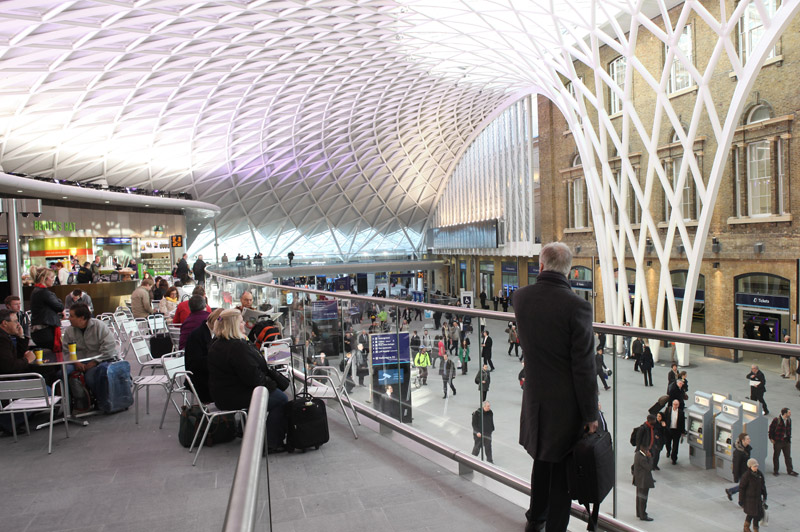 |
| The new King’s X Station concourse |
junction of Gray’s Inn Road, Pentonville Road, and New Road, which later became
Euston Road. The monument was sixty feet high, topped by an eleven foot high
statue of the king, and was described as “a ridiculous octagonal structure
crowned by an absurd statue”. The upper storey was used as a camera
obscura while the base in turn housed a police station and a public house. The
unpopular building was demolished in 1845, though the area has kept the name of
Kings Cross. The modern King’s Cross Station is built on the site of the Cross.
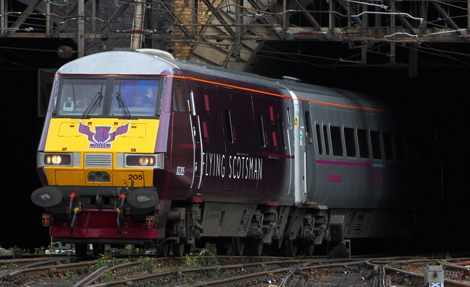 |
| King’s Cross Station’s most famous service “The Flying Scotsman” then and now |

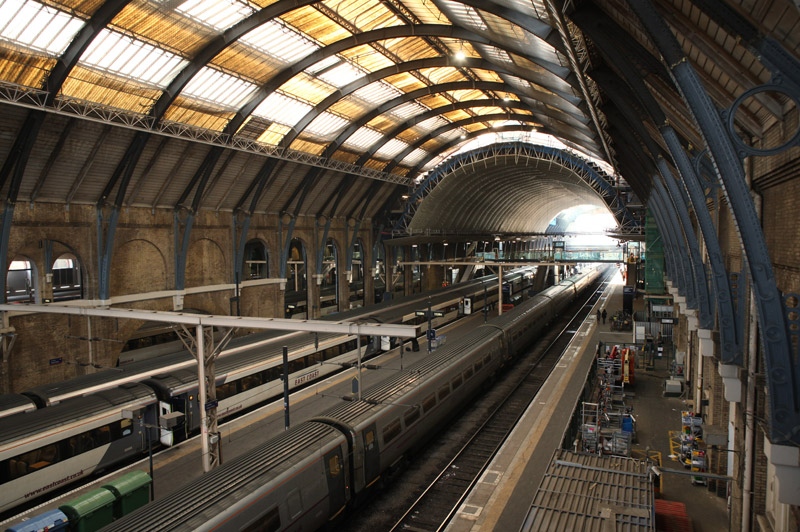
design of King’s Cross is functional. The facade, behind a forecourt building,
is built of London brick and features two train-sheds arches beneath a 120 ft
Italianate clock tower. The 70 ft high train-sheds, one for arrivals and one
for departures, extend for 800 ft to the rear of the station. The arched roofs
of the Arrival and Departure Halls span about 71 feet each. The cast iron
brackets supporting the arches are original, although the laminated wooden
arches have since been replaced with steel.
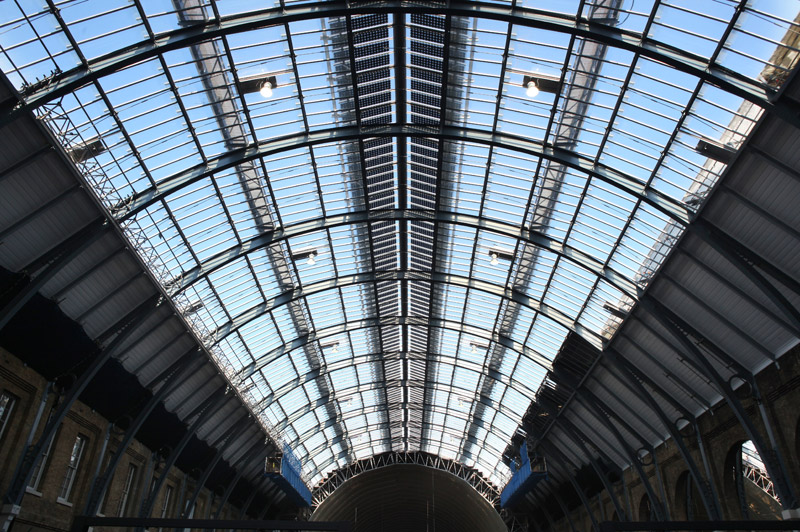 |
| King’s X train shed – after and before restoration |
see;
partnership with English Heritage: the facade will be revealed for the first
time in 150 years and original features have been retained to safeguard the
architectural integrity of the station.
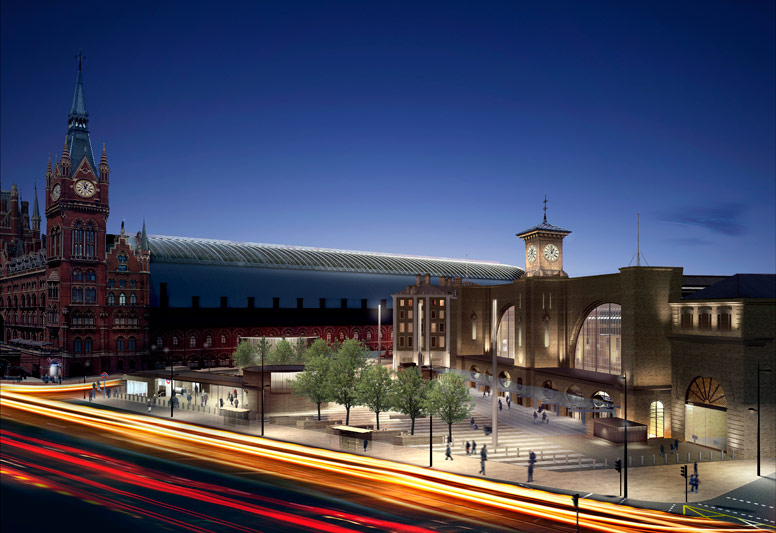 |
| A CGI of the new King’s X Piazza at night with St. Pancras in the background |
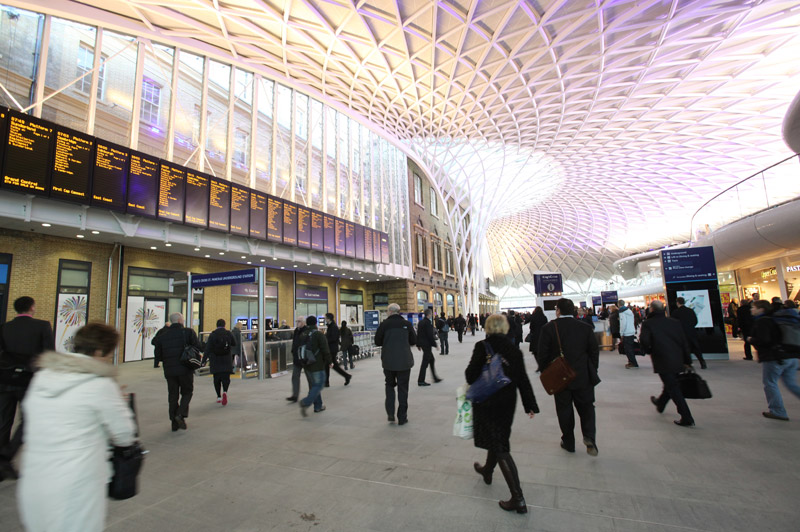
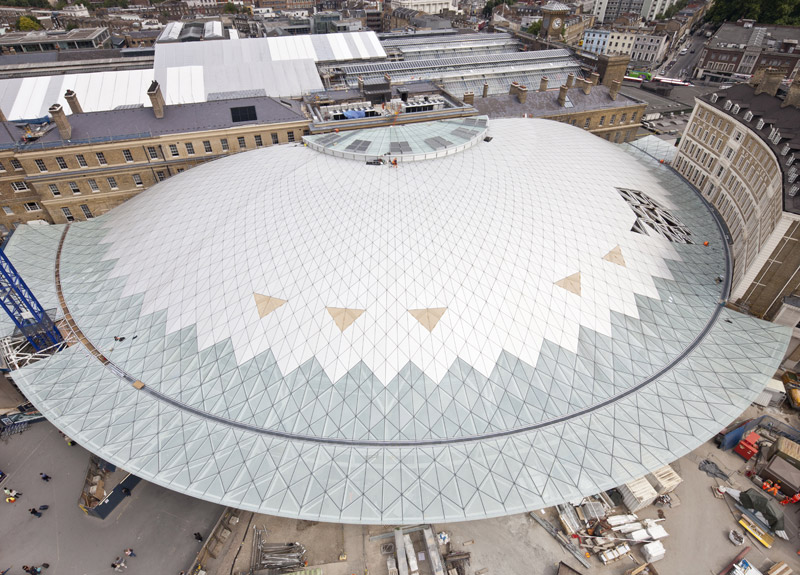 |
| A birds eye view of the new concourse roof |
the two overground stations major changes have already been made. King’s Cross
Underground Station today is a station transformed as part of the works for St.
Pancras Eurostar and the building of a complete new circulation areas and
ticket halls with step free access envisaged to the Circle / Metropolitan,
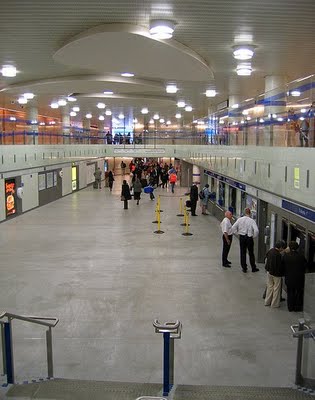
Victoria, Piccadilly and Northern Lines. The new Northern ticket hall at King’s
Cross St Pancras was opened in December 2009. The new Northern and Western
ticket halls significantly increased the capacity of the station to manage the
rising number of customers interchanging between the Underground and King’s
Cross and St Pancras International mainline stations. The Northern Hall
features new direct access routes to the Piccadilly, Victoria and Northern line
platforms via newly constructed pedestrian tunnels, and lifts to provide
step-free access to the Piccadilly and Victoria lines from street level.
 |
| The redeveloped Underground Station |
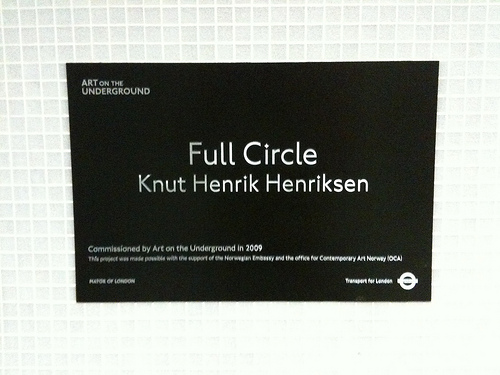
integral to a station since the 1980s – Full Circle, by the Norwegian artist
Knut Henrik Henriksen, which is on the new Northern line concourse at platform
level. The Western Ticket Hall similarly connects King’s Cross with St Pancras
and provides greater capacity and step free access to the Metropolitan / Circle
Line platforms.
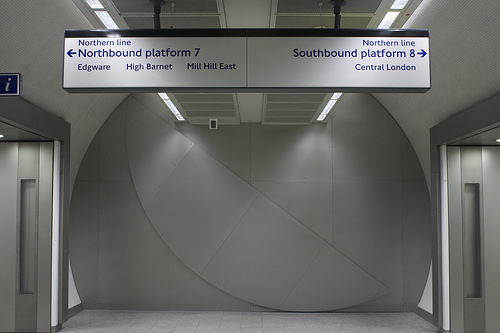 |
| Full Circle |
of the largest regeneration schemes in Europe, with 67 acres of brown-field
land being redeveloped to create eight million sq ft of offices, retail and
housing. In 2011 Central Saint Martin’s College of Art and Design moved into
renovated railway buildings to the north of the station.
 |
|
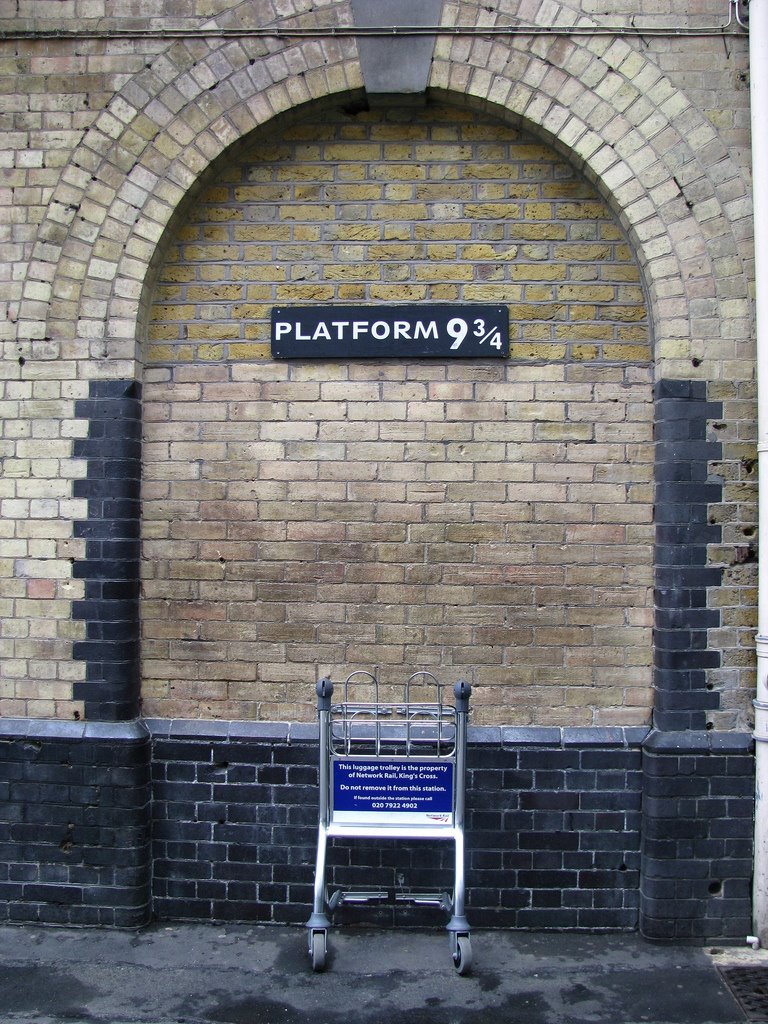
In the Harry Potter books Platform 9¾ at King’s X is the
platform from which the Hogwarts Express may be boarded on September 1st. The platform has, on September the first, a sign hanging over it, reading: Hogwarts Express, eleven o’clock, and there is a wrought iron archway bearing the words Platform Nine and Three Quarters over the entry/exit to the platform. |
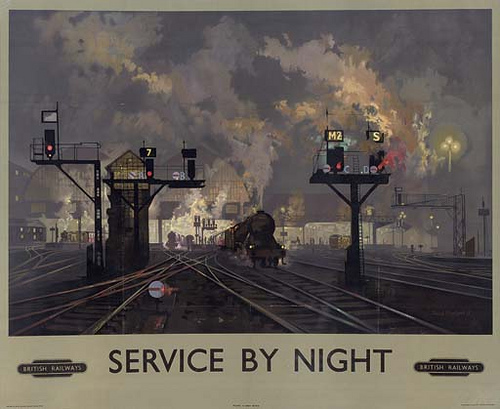 |
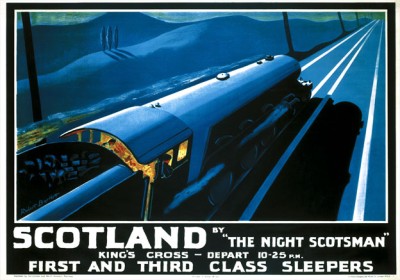
| An atmospheric 1950’s British Rail poster showing a night service leaving King’s Cross |
The great railway stations of London are more than part of the fabric of London, along with the wonderful
Underground they are what make this mega city possible. It is wonderful to see these two Grande Dames reborn and wearing new party frocks to serve the 60 million travellers each year who pass through King’s Cross and St. Pancras.
For the history of the world’s first Metro and the 13
National Rail stations connected to the Circle Line see;
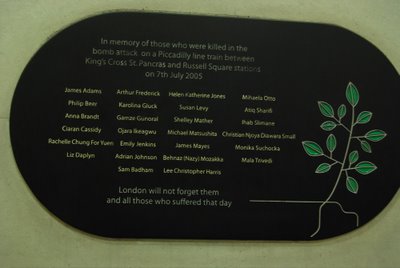 |
| The memorial plaque to the 26 victims of the London 7/7 Bombings who died between Russell Square and King’s X on the Piccadilly Line |