
Spinalonga – The Island
 |
| Spinalonga – “The Island” |
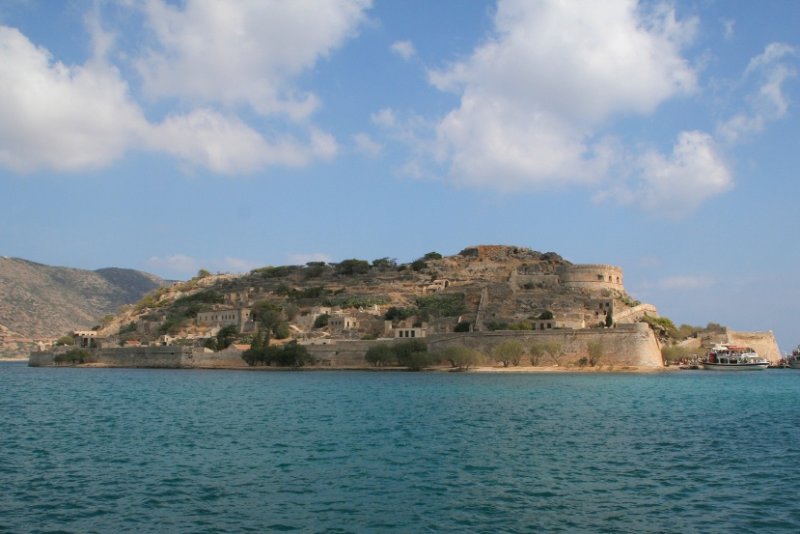
known in Greek as the “Island of the Dammed” which I visited a few days ago. Made
famous by Victoria Hislop’s book “The Island” Spinalonga was Europe’s last
Leper Colony in the days when the disease was incurable, operating from 1903
until its closure in 1957.
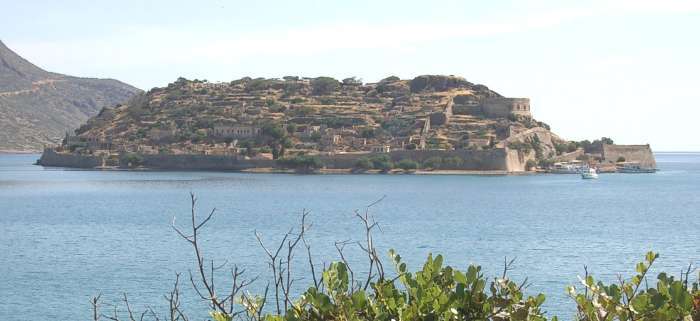 |
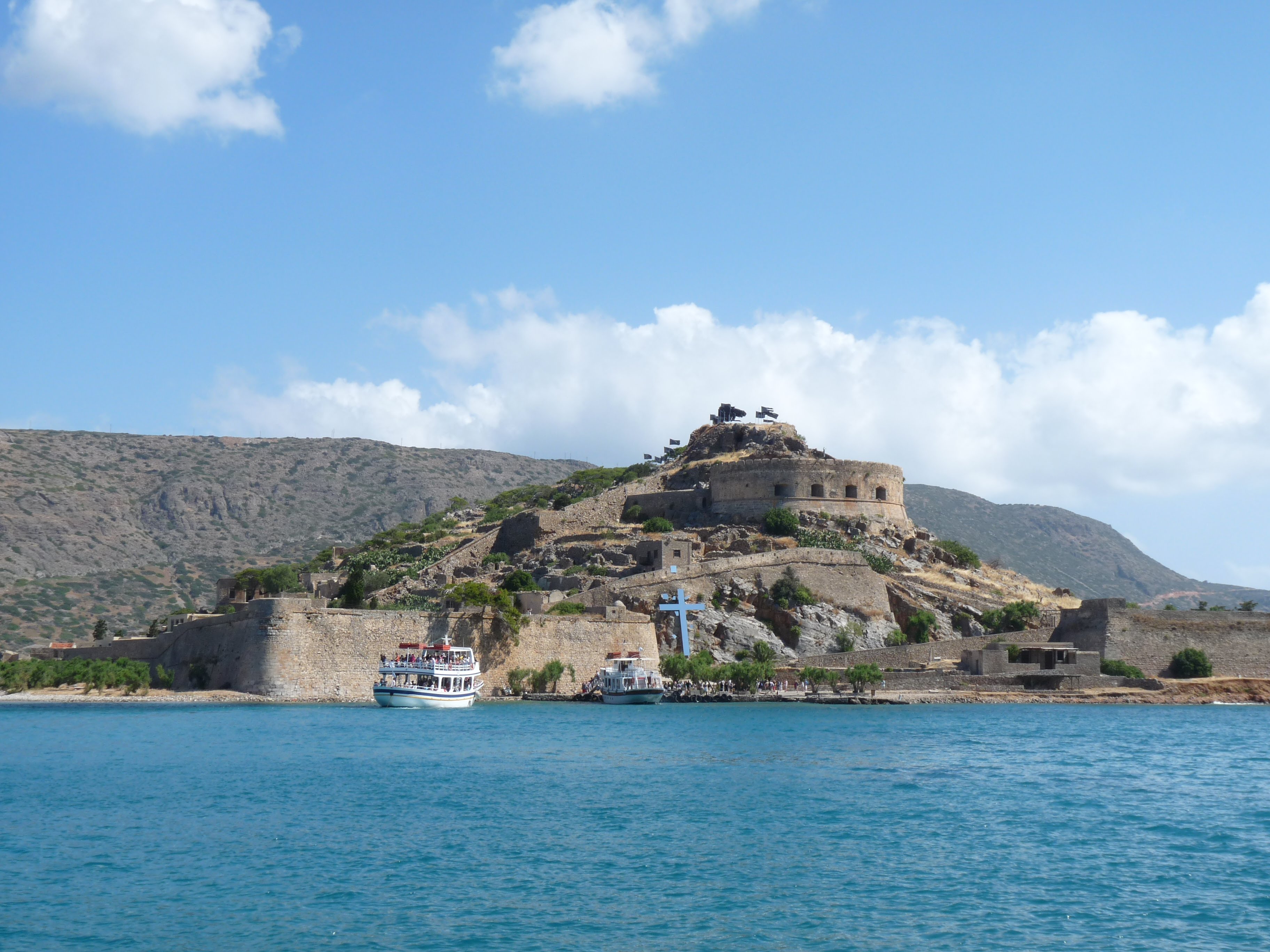
| Spinalonga seen from the village of Plaka on the mainland |
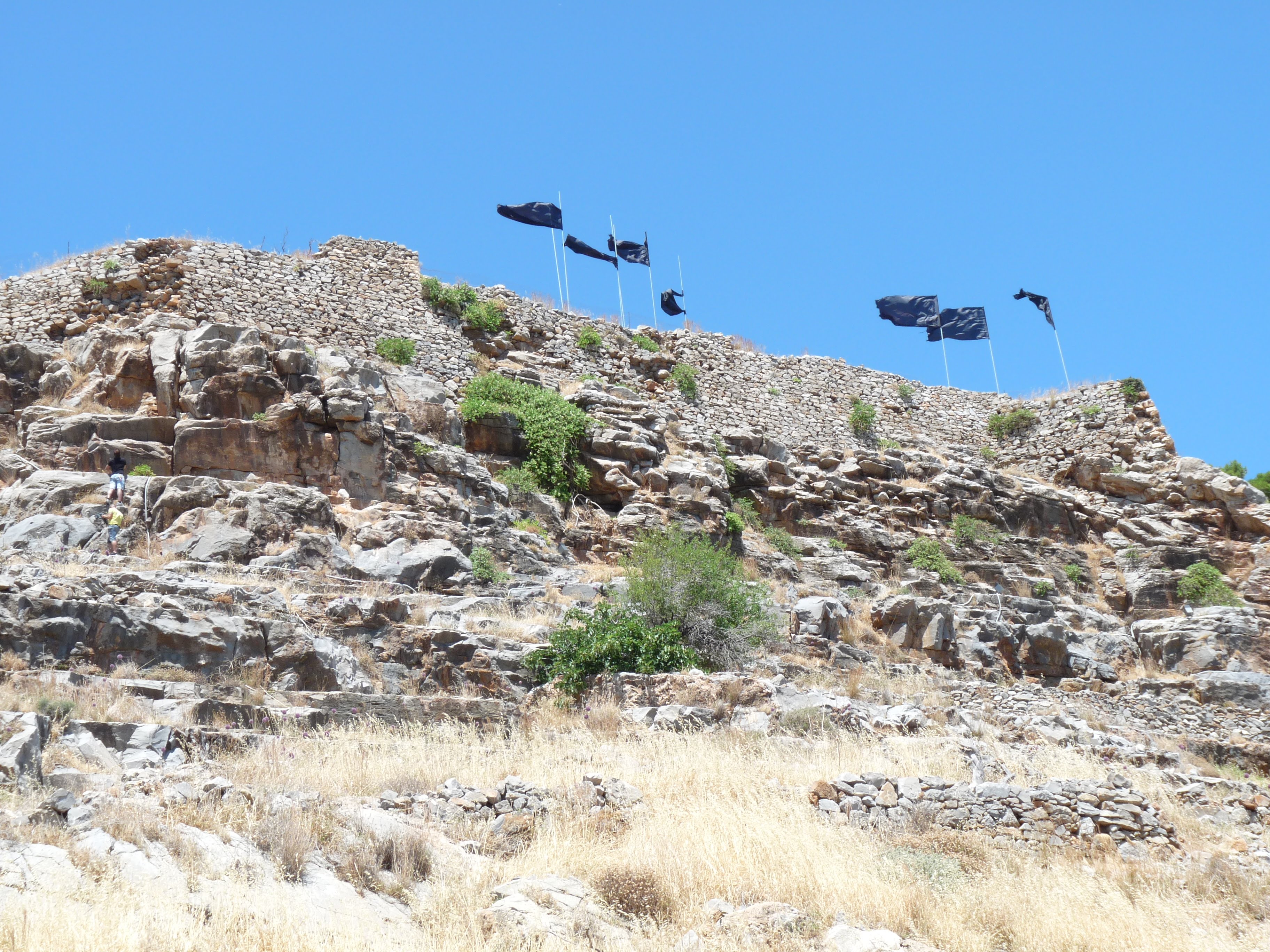 |
| The black flags flying from the upper bastion symbolising Spinalonga’s past as a Leper Colony |
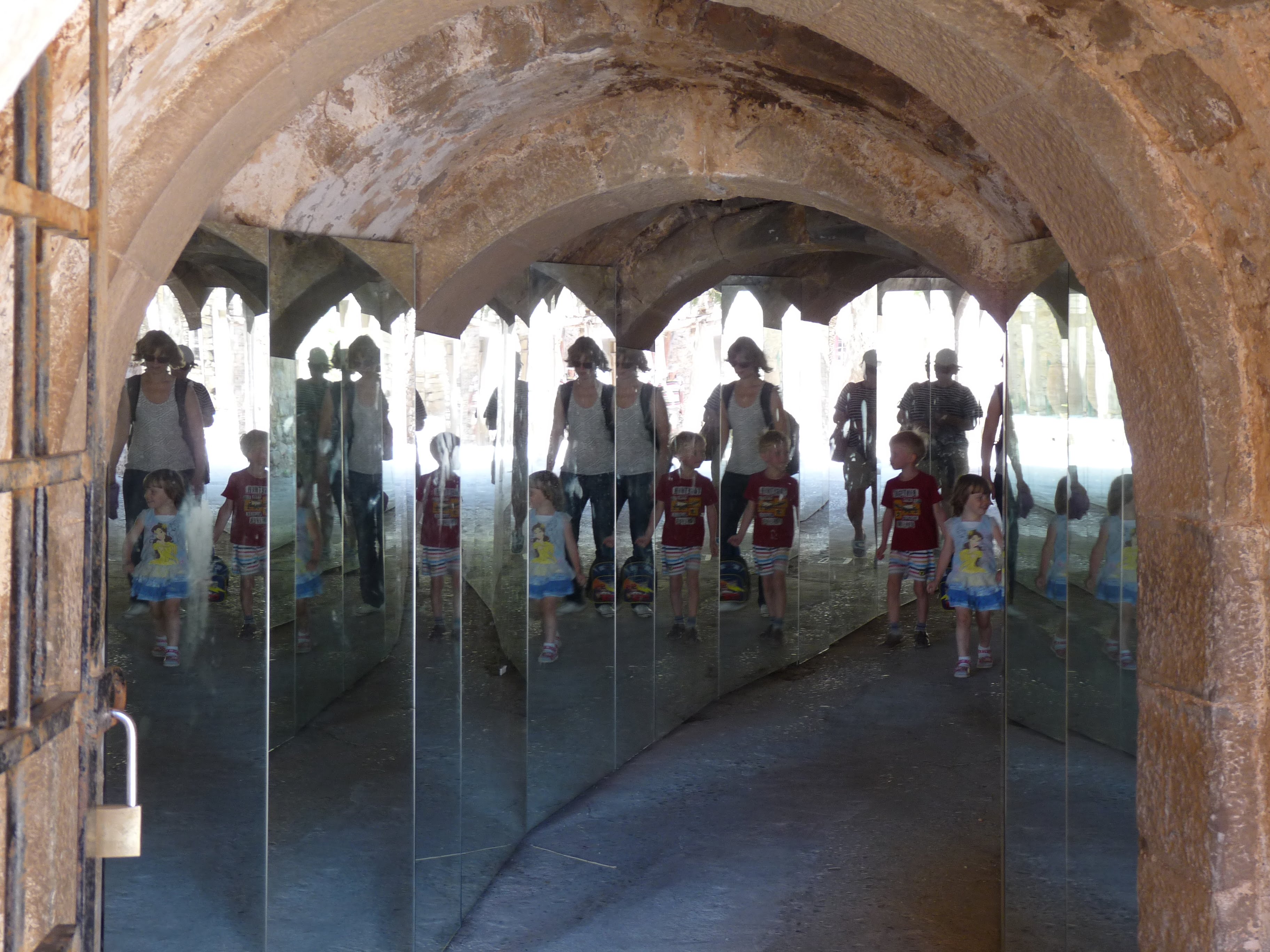 |
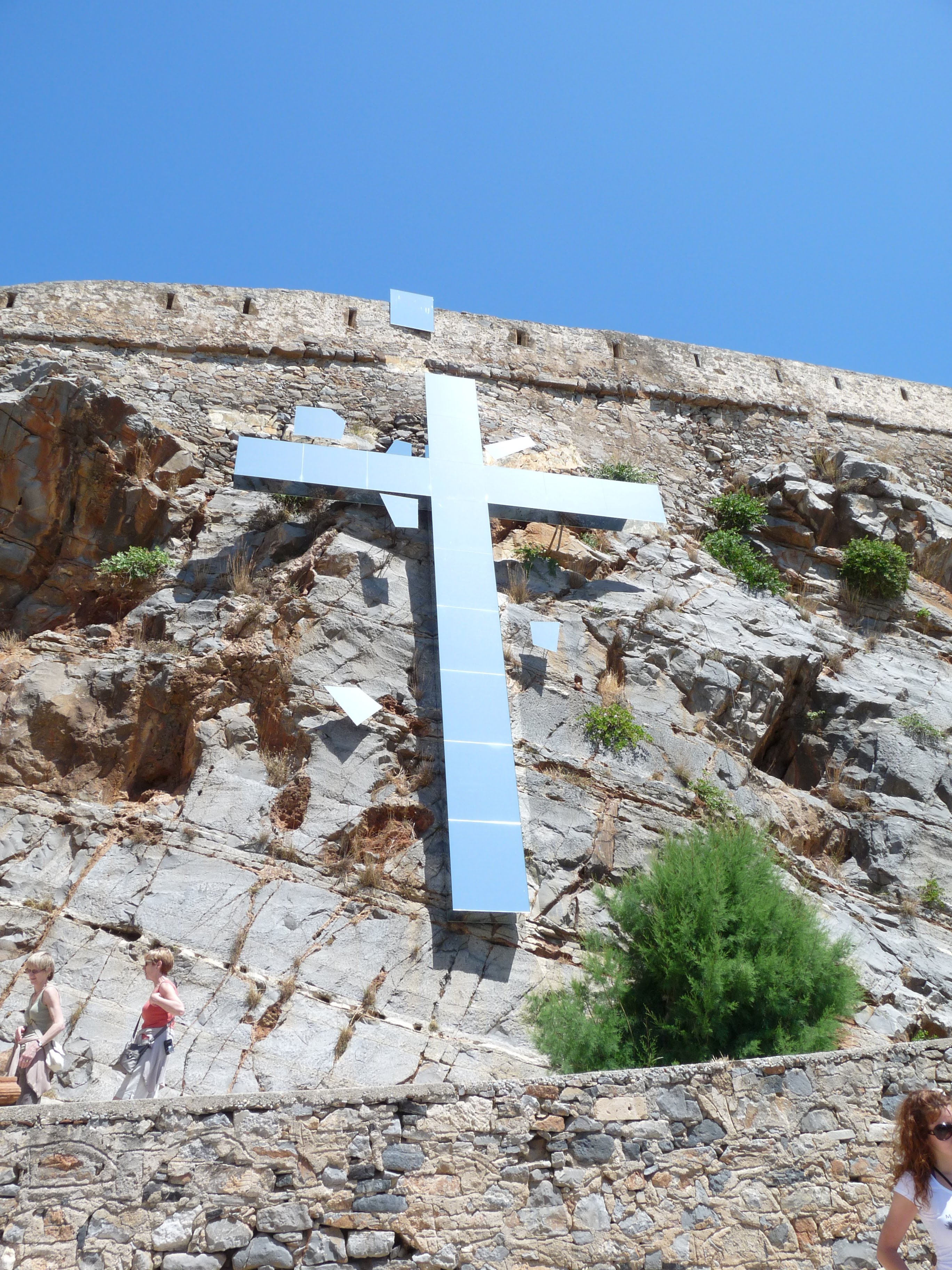
| The entrance tunnel to the Venetian Fortress. It is now mirrored as part of a series of artworks to symbolise the island’s history. The Lepers never had mirrors. |
defending Crete from Turkish invasion. The island of Crete, then known as
Candia, remained Venetian for almost 400 years before succumbing to the Ottoman
Army of Yussuf Pasha in 1669. The Siege of Candia (modern Heraklion, Crete) was
a military conflict in which Ottoman forces besieged the Venetian-ruled city
and were ultimately victorious. Lasting from 1648 to 1669, it was the longest
siege in history. Spinalonga, along with Gramvousa and Souda, remained in
Venetian hands even after the rest of Crete fell to the Ottomans in the Cretan
War (1645–1669) until 1715, when they fell to the Ottomans during the last
Ottoman–Venetian War. These three forts defended Venetian trade routes and were
also useful bases in the event of a new Venetian-Turkish war for Crete. Many
Christians found refuge in these fortresses to escape persecution from the
Ottoman Turks.
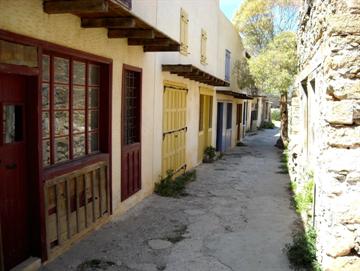 |
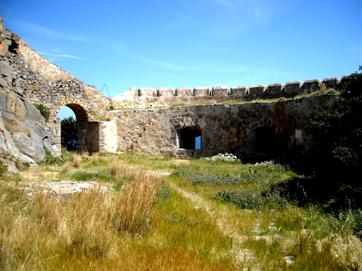
| “Main Street” – Spinalonga |
imagination of many over its long history. One of the most visited tourist
attraction on Crete, thousands of visitors every year walk along the narrow
streets through the village on Spinalonga. The name Spinalonga is Venetian,
meaning “Long Thorn.” The official name is Kalidon, but so well known
as its former name Spinalonga not even the sign posts and the boats that take
you to the island will call it anything but by its Venetian name. The Venetians
called it Spinalonga after a small island near Venice which is now days been
renamed Giudecca. The fortress on the island was built by the Venetians using
building materials from an original ancient fortress on the island. It was
founded in 1579 by Luca Michiel and the island was used as in defence of Crete
usually against the ever expanding Turks and pirates. The Venetians were
defeated by the Turks in 1669 however the island stayed in Venetian hands until
1715. Later in history it was inhabited by Ottoman Turks until 1903 and when
they left the island became a leper colony by order of the Cretan Government of
the time. After Crete was joined in union with Greece on 1 December 1913,
lepers from all over Greece were moved to the island which had a population
around 400/450.

which was then incurable and condemned the sufferer to a life apart. At the
time sick people with Leprosy were known as the untouchables, because the
illness was incurable and wrongly considered contagious, and was also known
already from the Old Testament as a punishment from God to incredulous and
impure people. Leprosy is caused by a slow-growing bacillus, Mycobacterium
leprae. It is transmitted via droplets from the nose and mouth of untreated
patients with severe disease, but is not highly infectious; indeed 95% of the
population have a natural immunity. If left untreated, the disease can cause
nerve damage, leading to muscle weakness and atrophy, and permanent
disabilities. Today, Leprosy can be easily treated with a 6–12-month course of
multidrug therapy. The treatment is highly effective, and has few side-effects
and low relapse rates; there is no known drug resistance. It is also known as Hansen’s
disease after the Norwegian physician who first developed a treatment in the
1870’s and identified the main symptoms and the parthenogenesis of the disease.
His treatment stopped the disease progressing but it was only in the 1930’s
that multidrug therapies were developed which reversed the disease’s progress. The
disease originated in India and was brought to the Middle East by the armies of
Alexander the Great. The Crusaders are reputed to have brought it to Europe
where the superstitious medieval mind needed little persuading that the very
visible suffering of those afflicted was a punishment from God and with its grotesque
progress those sufferers were dammed on Earth.
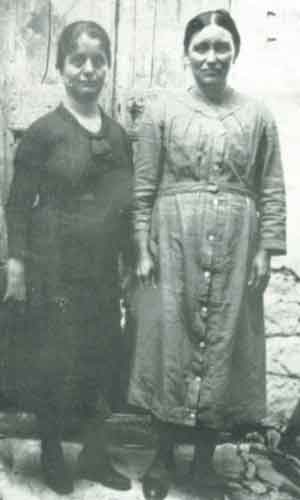 |
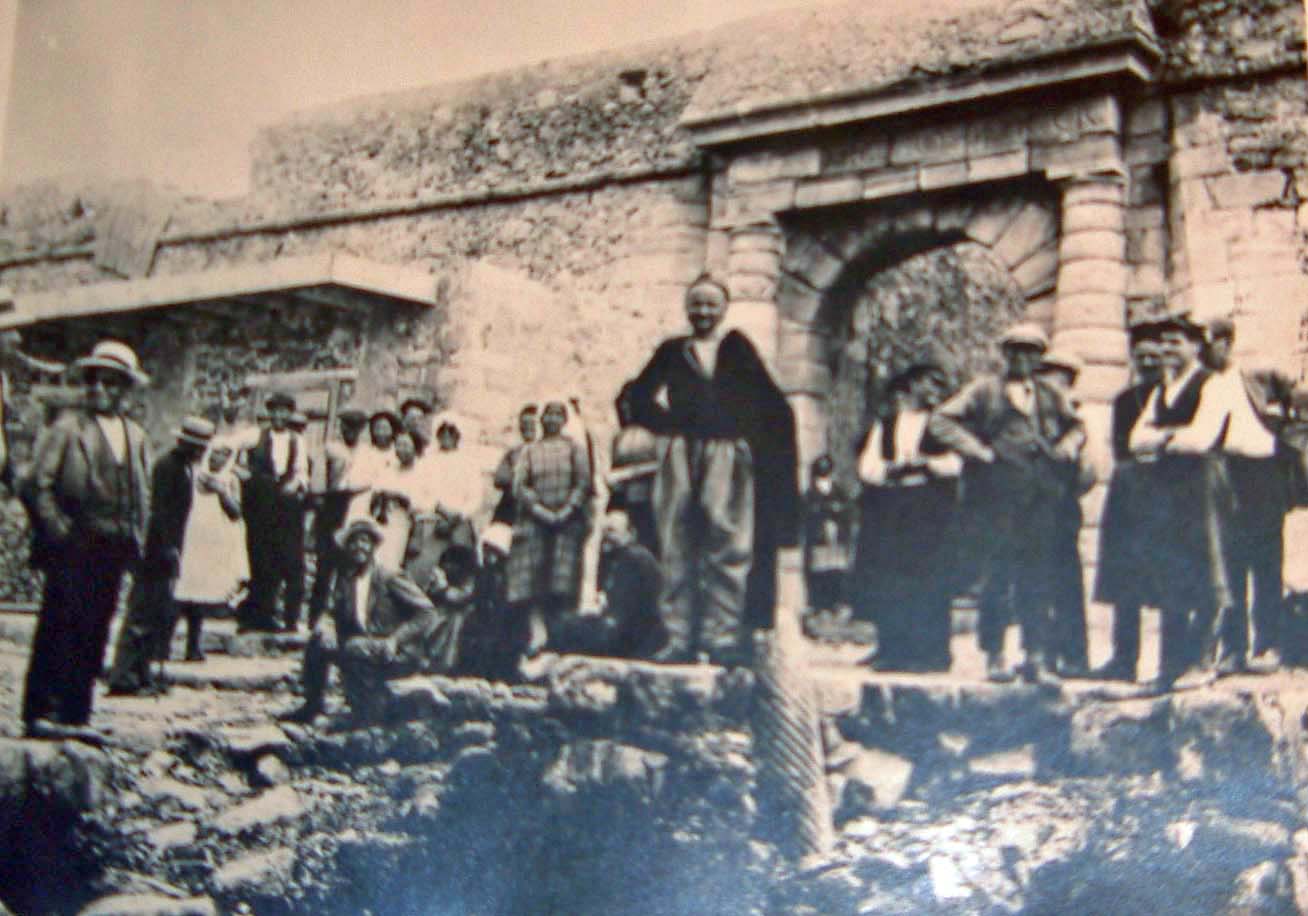
| Lepers on Spinalonga |
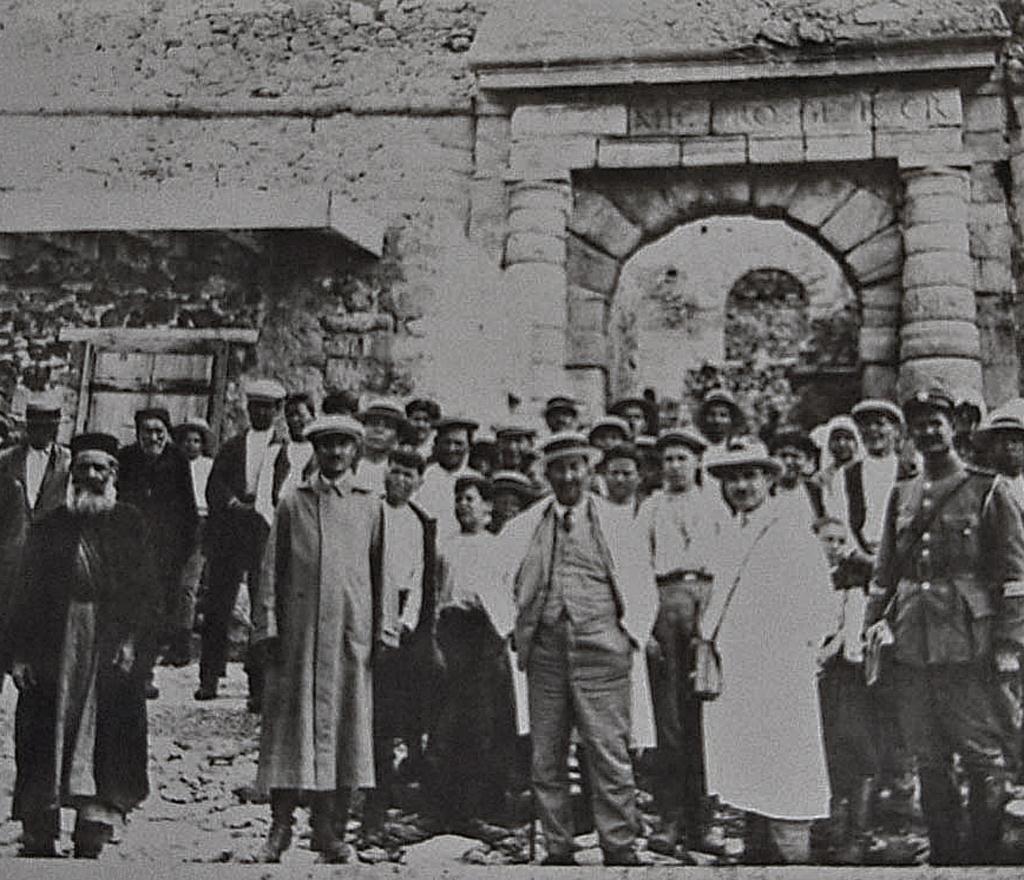 |
|
Doctor, Priest and Inmates, Spinalonga, 1931
|
lepers’ entrance, a tunnel known as “Dante’s Gate”. This was so named
because the patients did not know what was going to happen to them once they
arrived. However, once on the island they received food, water, and medical
attention and social security payments. Previously, such amenities had been
unavailable to Crete’s leprosy patients, as they mostly lived in the area’s
caves, away from civilization. Living conditions were very poor and eventually
the lepers formed their own community with its own laws. In the 1930’s a
generator was installed, and a library, school and churches were built – things
began to improve. Plaka began to grow as villagers from the area used it as a
base to sail to the island to sell produce to the colony – by now the lepers
were given a small pension. Shops began to appear on the island including raki
bars and a bakery. Improvements
continued throughout the 1940’s and 1950’s, but the feeling of isolation
remained and the residents of Spinalonga began to lobby the Government to be
moved. In 1957 the last lepers were
moved to a colony near Athens, and Spinalonga fell into ruin.
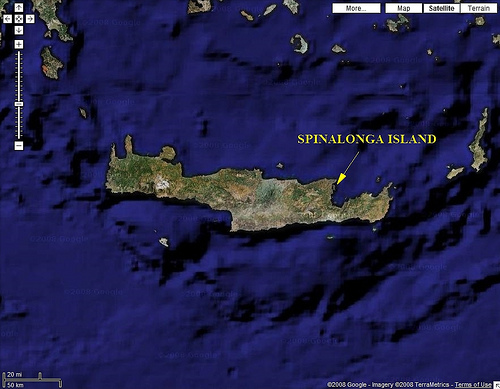
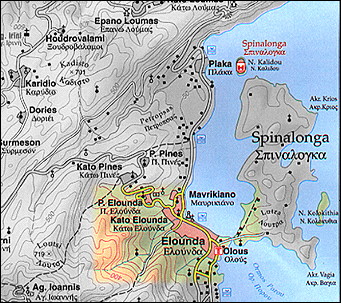
Turkish and Venetian areas. In the 1930’s conditions improved and lepers on the
island were paid a pension which they could use to buy goods and services from
the mainland. After WW11 new accommodation blocks were built and many of the
families moved out of the houses into these. This ironically meant that they
were often better off than the mainlanders in the adjoining villages of Elounda
and Plaka who became economically dependent on “The Island.”
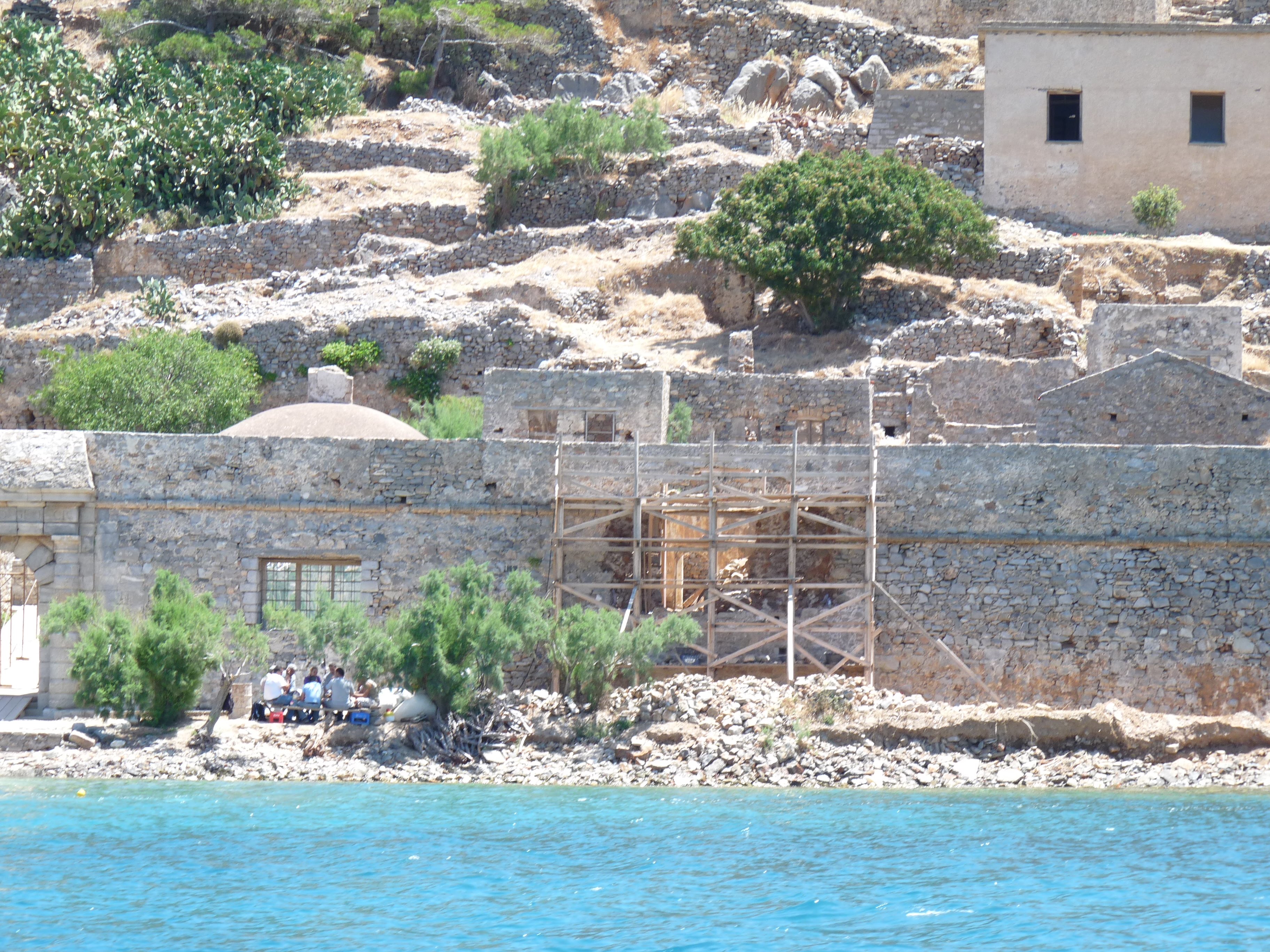 |
| “Dante’s Gate” |
sensitive, realistic engagement with all the consequences of, and stigma
attached to leprosy.
during the German occupation. The Battle of Crete in 1941 was vicious with the
German Airborne division sustaining 7,000 casualties with not just the Allies
but ordinary Cretans attacking German Paratroopers with anything they could
find. The resistance continued throughout the war with the people paying a
terrible price with German executions of anybody suspected of resistance
becoming commonplace. By 1945 with the help of a small group of Allied
commandos and supplies the Cretans had retaken most of the island with the
Germans under siege in Chania in the west. They even helped (and paid a high
price) to capture the German Commander of Crete in 1944, General Kreipe, and to
spirit him off the island to Cairo. The event was later immortalised in the
book ‘Ill Met By Moonlight’ by Billy Moss and the film of the same name. The
Germans were forbidden to enter on the island of Spinalonga which became a
refuge for those fleeing the occupation. Instead German soldiers would take up
position on a concrete domed water tank in Plaka opposite and use people
swimming to and fro for target practice. Many died this way trying to escape or
going back to the mainland for food.
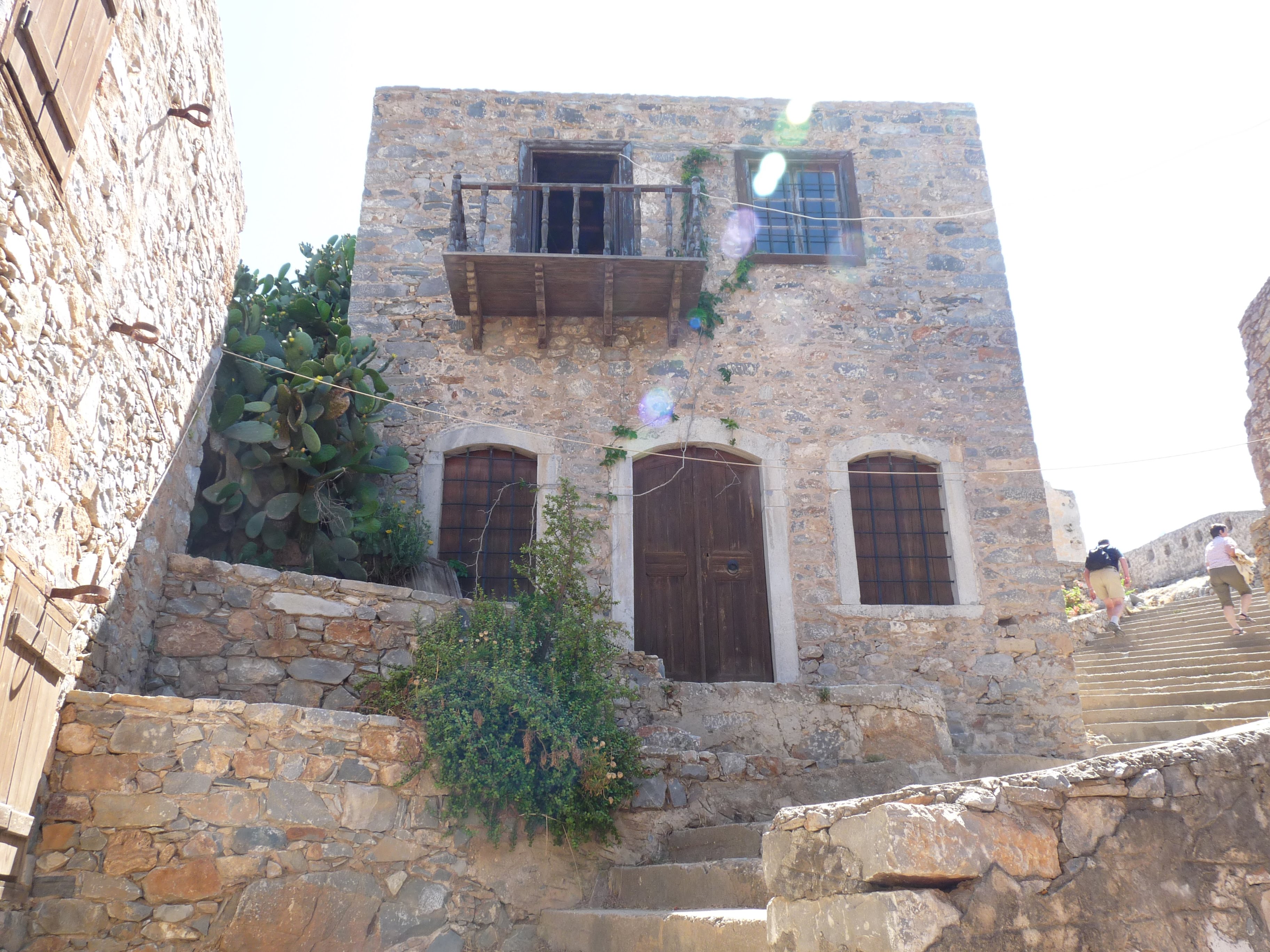
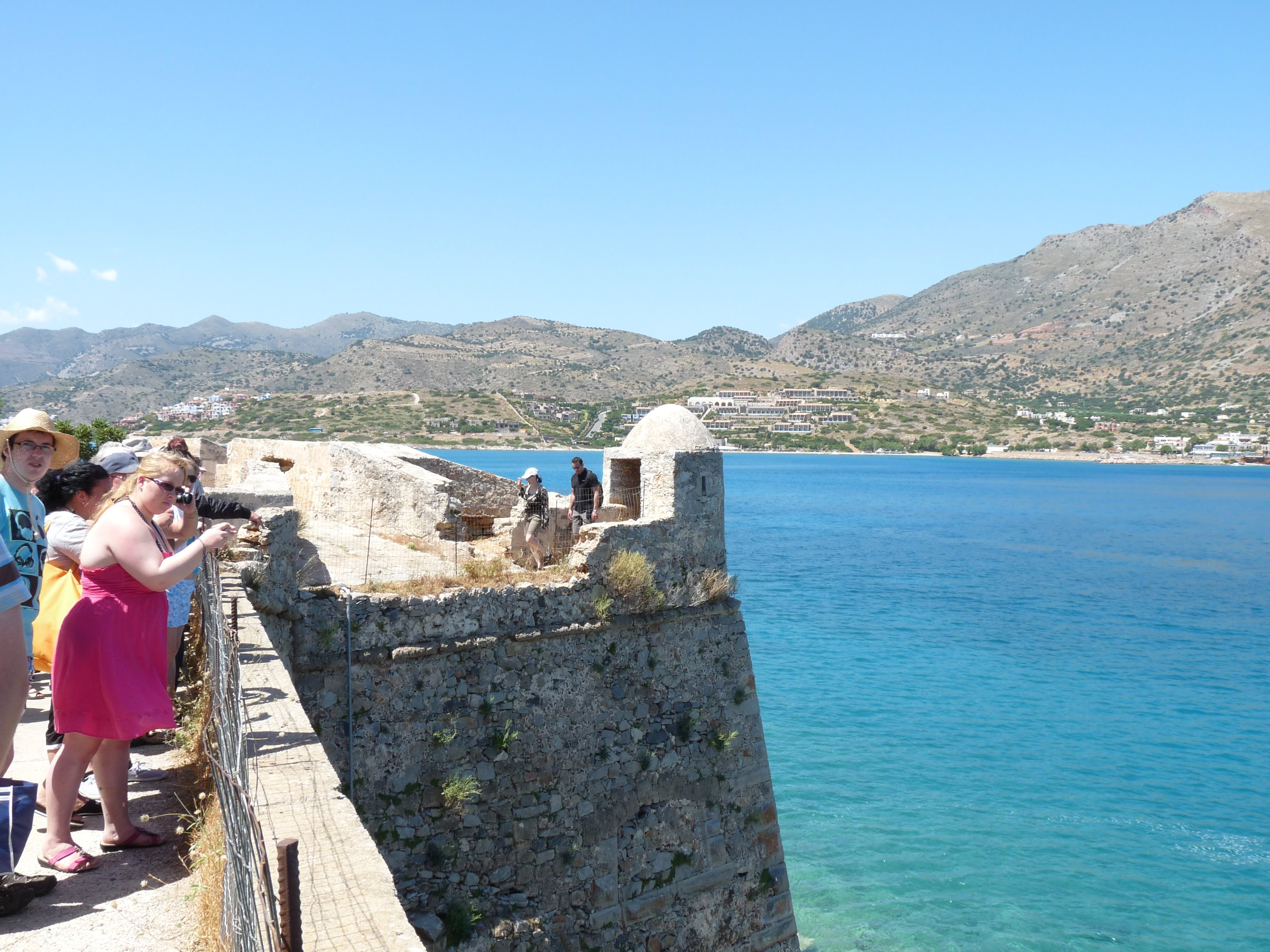
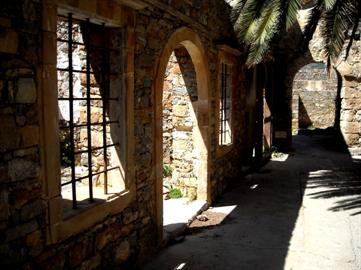
was strange. Because of the Leper Colony many in these villages had jobs on the
island or made money supplying goods or services. On the one hand you had the
dread of leprosy and on the other hand you had this symbiotic dependency build
up between the people of these economically depressed villages and the leper
colony which people could not leave but where they had a steady income and a
thriving community. Indeed on the island you had shops and cafes and social
events. More than that the people felt protected and there were marriages and
children, so you had affected and unaffected people living side by side on the
island. At the end many were fearful to leave and feared being shunned back in
the “world.”
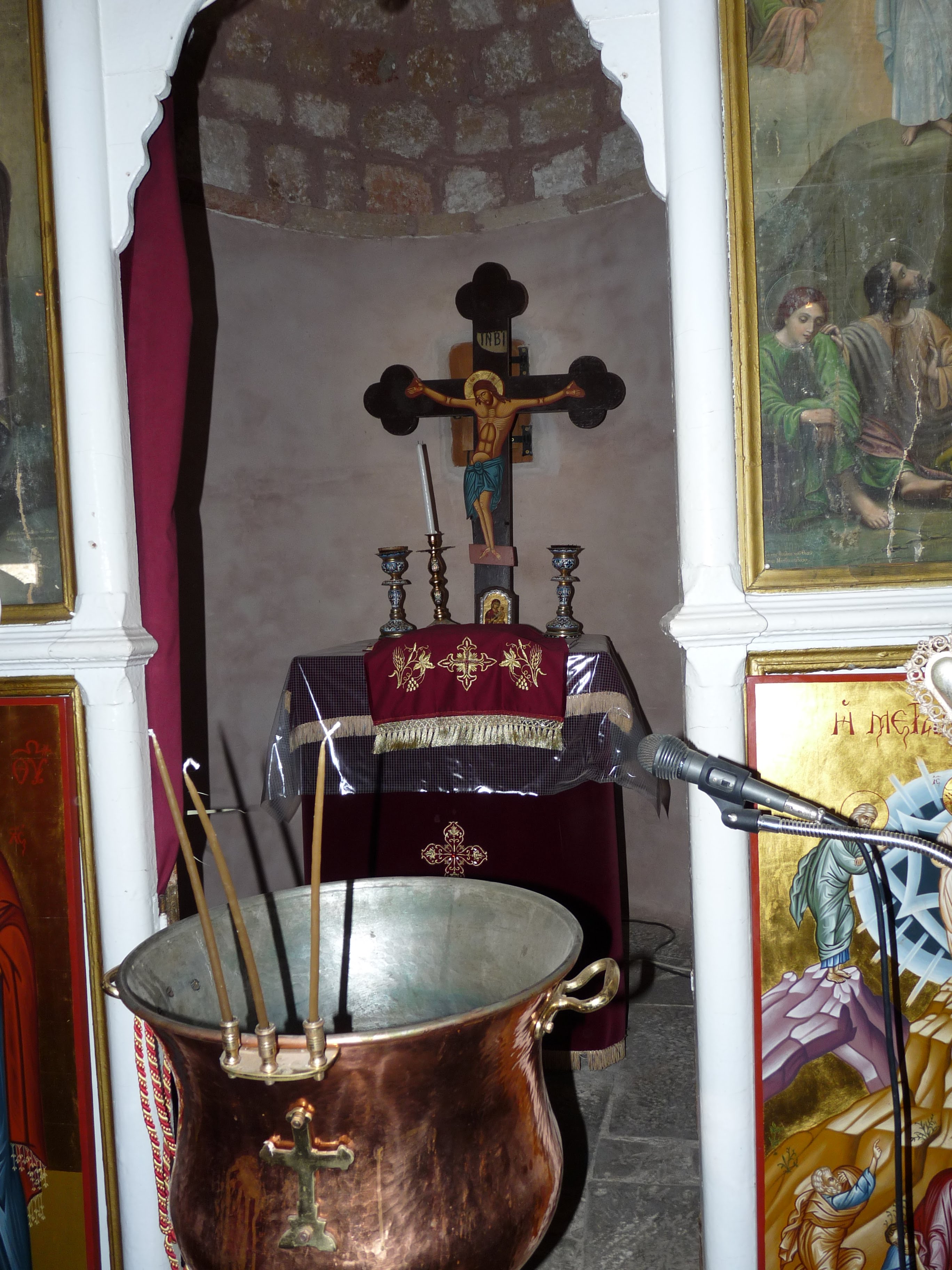 |
|
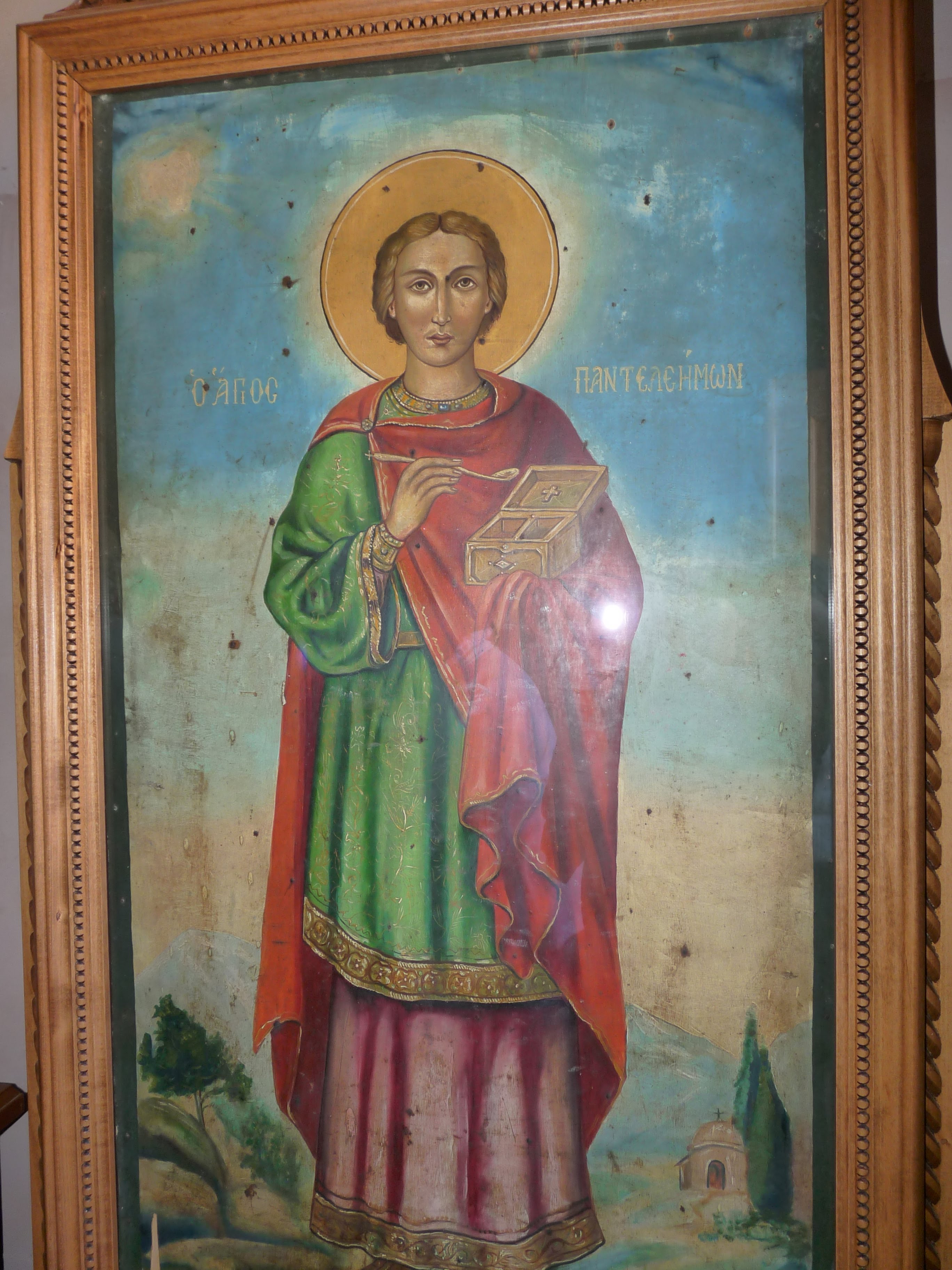
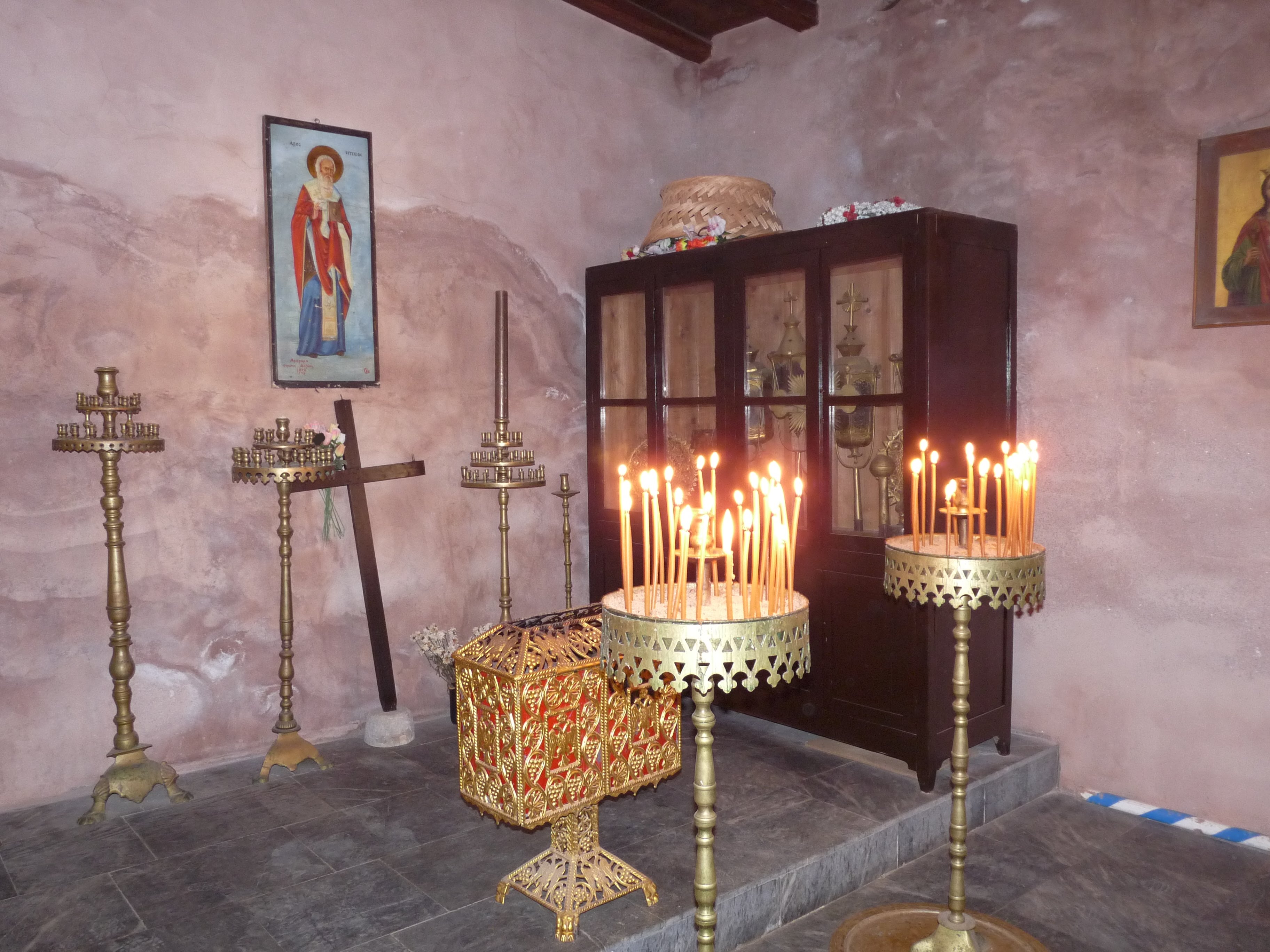
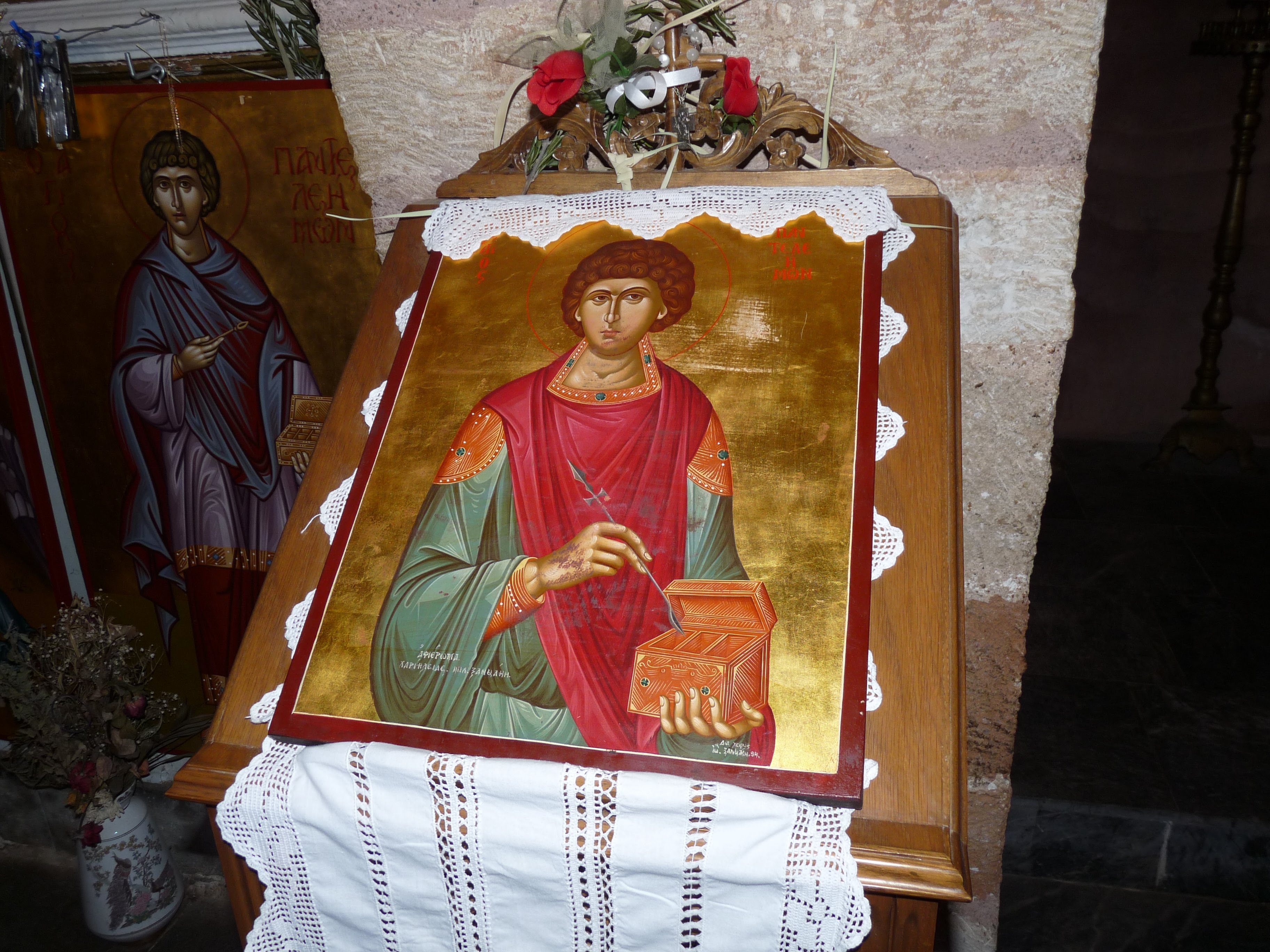
Church of St Panteleimon on Spinalonga which was used by the Lepers.
Known in Greek as Παντελεήμων “all-compassionate” he is also referred to as Panteleimon the Healer,
hence the dedication of the
church to him on the Leper Colony. |
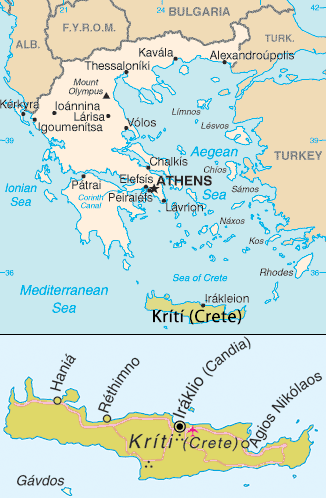
island, is located in east Crete, north of Agios Nikolaos and south of the
seaside resort of Plaka. It was once a picturesque fishing village in the
lovely Mirabello Bay, so named by the Venetians for its “lovely view.” The
inhabitants lived from farming, fishing, salt extraction from the Venetian
saltpans, and emery mining. In the hills around Elounda is found a mineral
unique to Greece, “akonopetra” or whetstone, a type of fine emery used to make
whetstones and emery paper to hone tools used in many different jobs. The emery
of Elounda had long been known in Europe by the name of “Turkey stones” or
“Naxos stone”. More recently from the early 1930s to the outbreak of World
War 2 Flying Boats of Imperial Airways used the sheltered bay at Elounda,
between the town and Spinalonga Island (known then as Mirabella Harbour) to
stop on the flight from London to South Africa, the Far East and back.
particularly fond of Elounda and came here on holiday at least once a year. He
introduced it to French President Mitterrand and Libyan leader Gaddafi, while
Elounda was also a favourite resort of Kostas Simitis, another more recent
Greek Prime Minister. Apart from politicians, Elounda often welcomes Arab
princes with their large families, film and music stars, Russian tycoons and
other VIPs from all over the world.
After its years of dereliction Spinalonga is coming back to
life as a restoration programme continues and there are interesting and often
poignant displays of life on the island with many artefacts from the period. There
are two churches on the island as well as the hospital and newer buildings. The
most poignant place is the graveyard for the lepers never left the island even
in death. They were buried in temporary graves and after three years their
skeletons were dug up and removed to an ossuary adjoining the graveyard.
Earlier visitors speak of human bones being visible. The earlier neglect by the
Greek State was redeemed by the colony itself and enlightened administrators
who both built a real community on the island and improved the care and medical
treatment of the inhabitants. When the colony was closed in 1957 there were
only 30 nervous patients left who were transferred to the Hospital of Santa
Barbara in Athens.
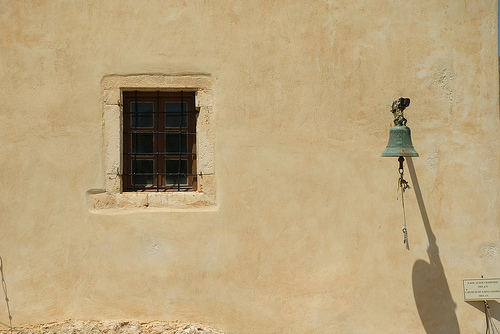 |
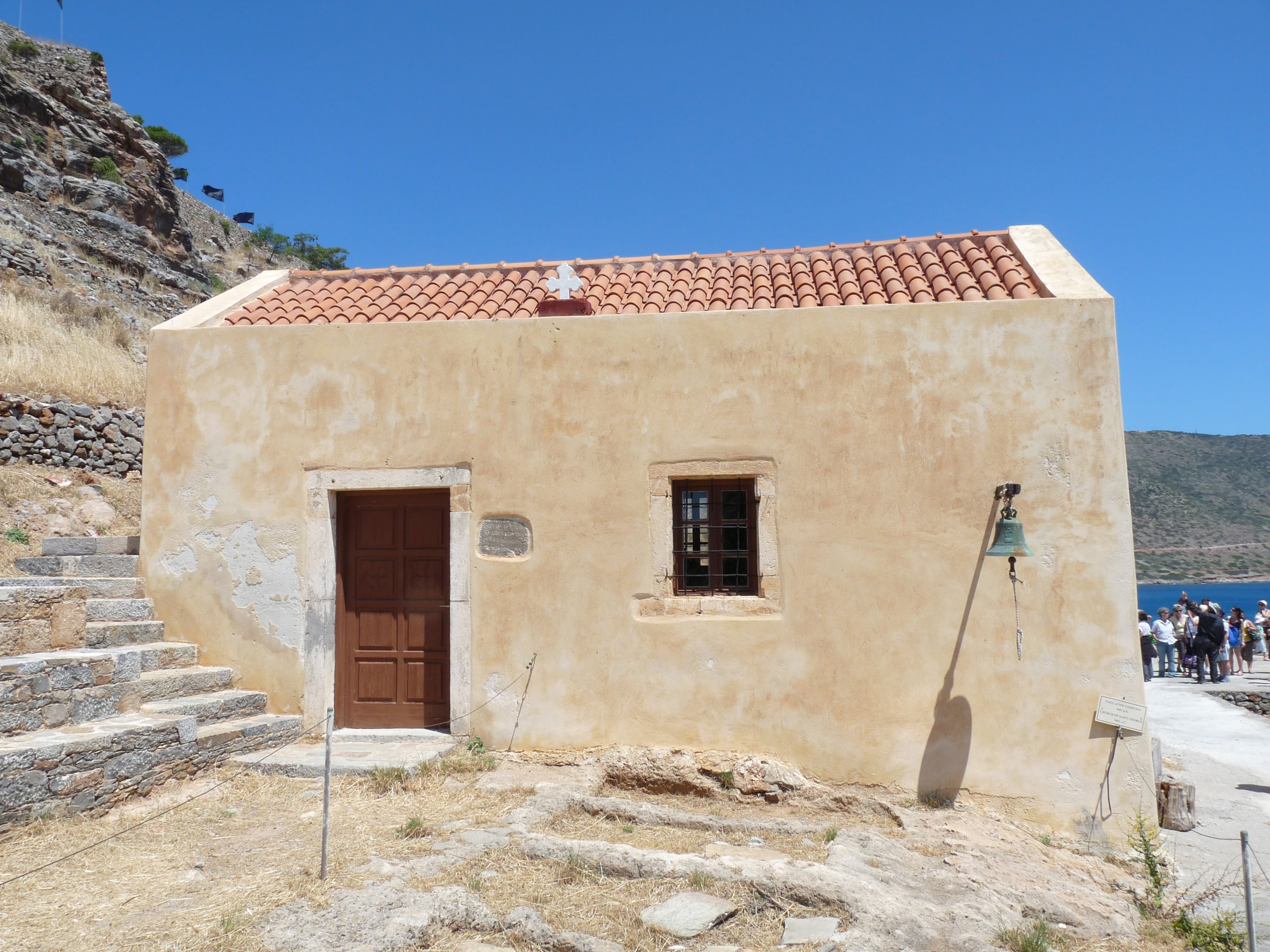
| The other church on the island, Agios Georgiou. St George was Patron Saint of the Crusades which is somewhat ironic as the Venetians acquired Spinalonga and indeed all of Crete as a result of the 4th Crusade which instead of recovering the Holy Land resulted in the shameful Rape of Constantinople. http://daithaic.blogspot.co.uk/2008/04/fall-of-byzantium.html |
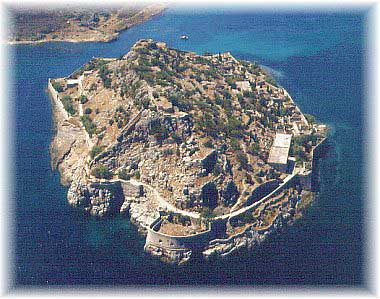
Spinalonga is a natural rock formation which the Venetians probably made into an island by cutting a channel to separate it from the Kolokitha Peninsula. The original fortifications and dwellings are at the base of the island with two artillery bastions and musket points at the corners. Within these walls are also cisterns which collect rainwater from the rock as there are no groundwater sources on the island. Later, upper fortifications were built on top of the rock to cover the lower fortifications. This had the effect of making the Fortress of Spinalonga impregnable as the lower bastions were covered by artillery fire and the upper guns were out of range of attacking ships.
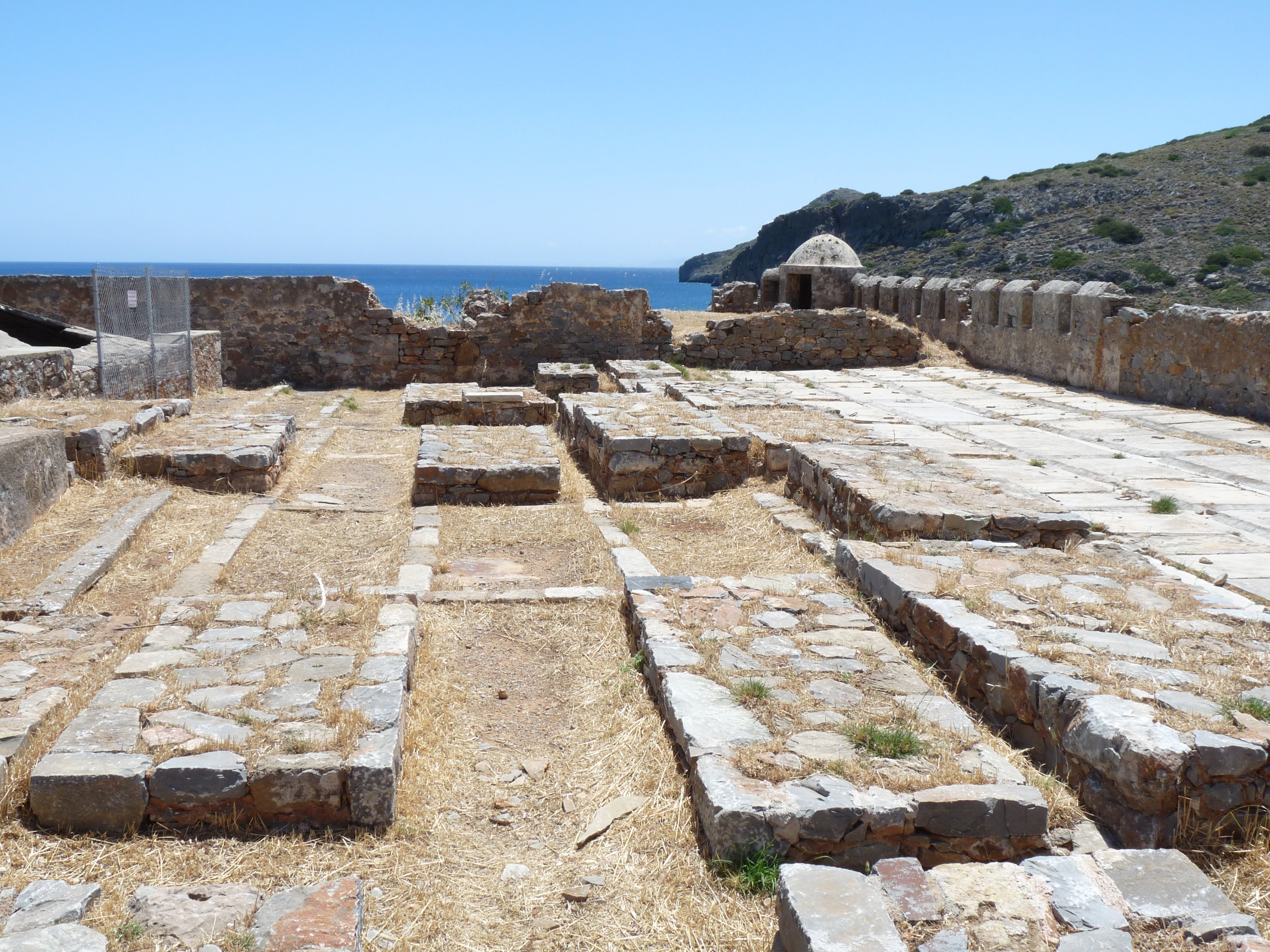 |
| The Graveyard with the temporary unmarked graves |
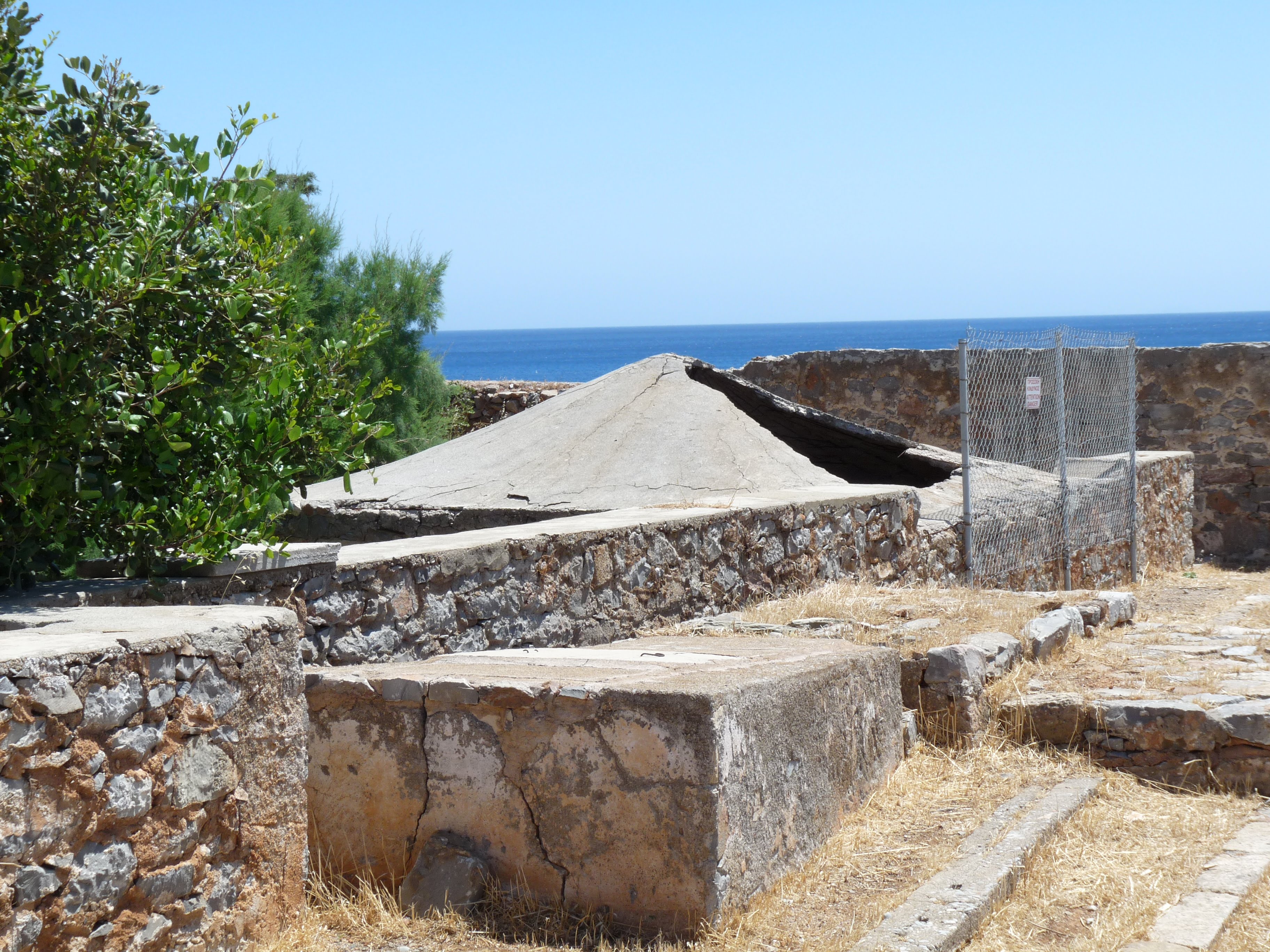 |
| The ossuary where the bones of the lepers were re-interred in boxes after three years in the graves |
it would be wrong to say she is admired and respected on the Island of Crete,
although undoubtedly she is. Rather she is loved; loved as a Xeno for learning
Greek and talking to people on Crete about the reality of Spinalonga, the
reality on the island and on the communities of Plaka and Elounda. Loved for
telling the human story of the colony for it has allowed the Greeks to talk
about something which was dark and hidden. Now the book in Greek and other
languages is for sale all over the island and Spinalonga is the most visited
tourist attraction on Crete after the Palace of Knossos. Victoria still has a
house there but on the far side of Agios Nikolaos from Spinalonga.
hand of The Ministry of Culture which knows as much about running visitor
attractions as I do about banana ripening. So with 3,000 daily visitors in
season paying 3 Euros a go what toilet or catering facilities are available on
the island? The answer my friends are none, zilch, diddly squat or to use the
Greek, ZERO. This is doubly strange because a Kafeoin and toilets have been
built (no doubt with EU grants) but the lazy bureaucrats in Athens can’t be
bothered to open them, no doubt citing budget cutbacks but forgetting their
paying guests are entitled to some facilities and dignity. They will never
improve because this stultifying Ministry does not speak to tourists but do of
course speak to each other about their self-important jobs. Indeed I must not
be unfair and I must assume, despite the evidence, that some of them have
actually applied for their jobs.
 |
|
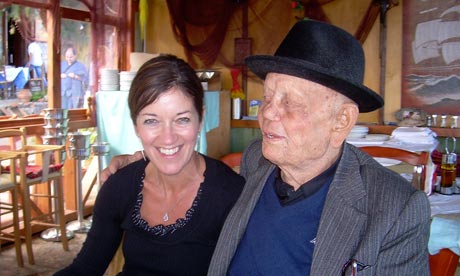
Victoria Hislop and Manoli Foundoulakis, a former leprosy sufferer
who lived
in the hills overlooking Spinalonga, in the village of Ano Elounda.
He
died on 28 May 2010 peacefully at the age of eighty-seven. |
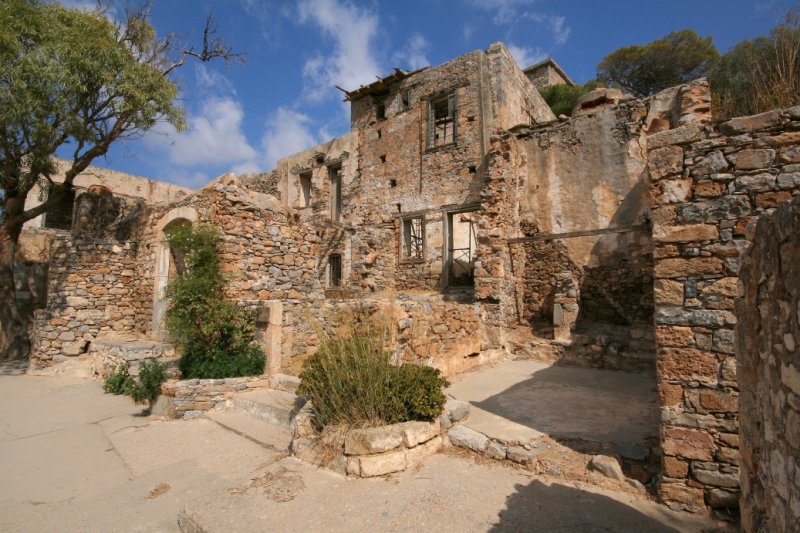
With the passage of time the small
village and walls of the fortress have begun to crumble, however much work has
been done on the island over the last few years to repair its fabric and this
continues. But no repairs will ever plaster over the all pervading sense that this island is a special
place where every stone speaks to you of the pathos and melancholia of those who
came to live and to die without ever leaving the Island of the Dammed.
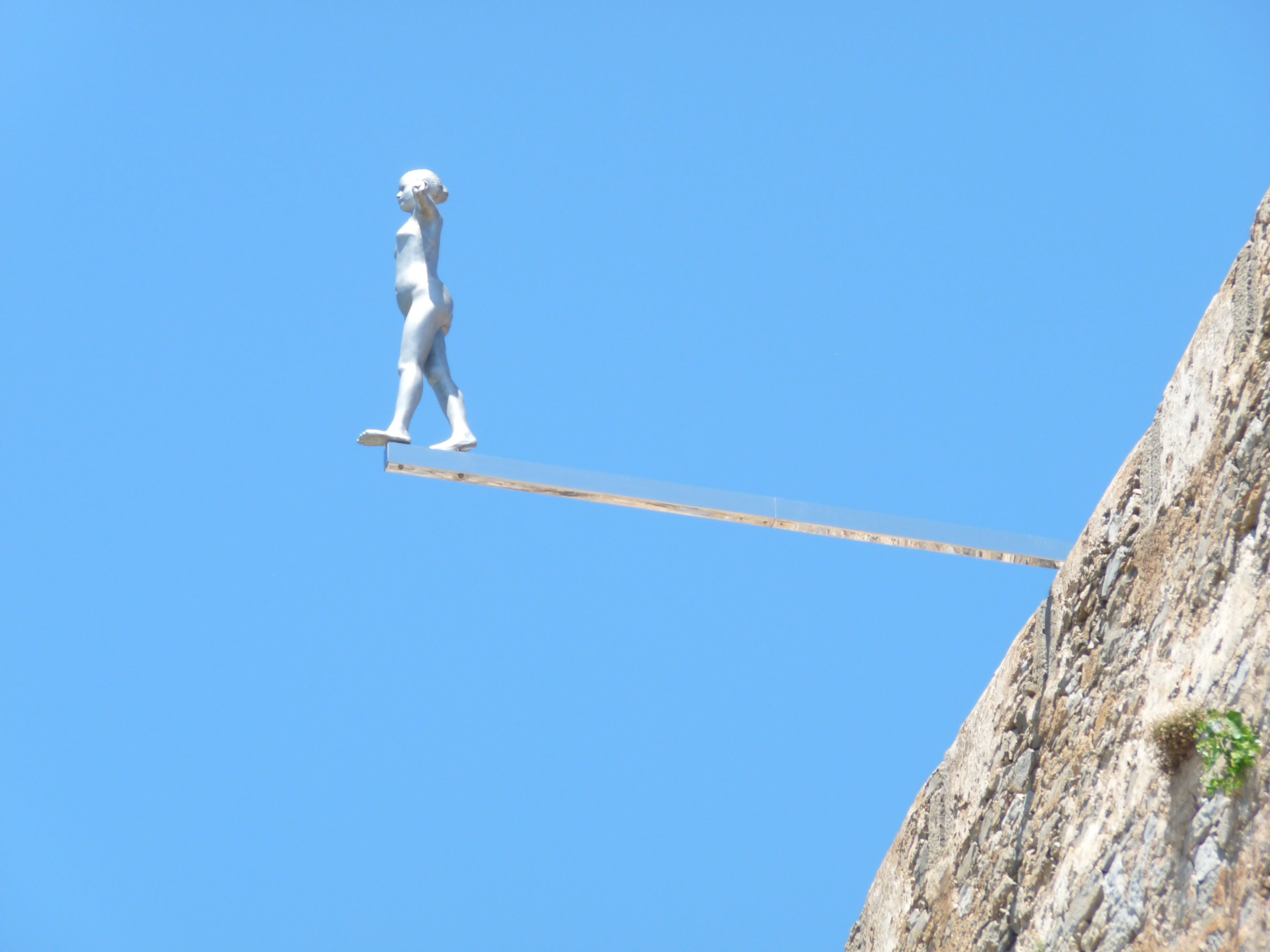 |
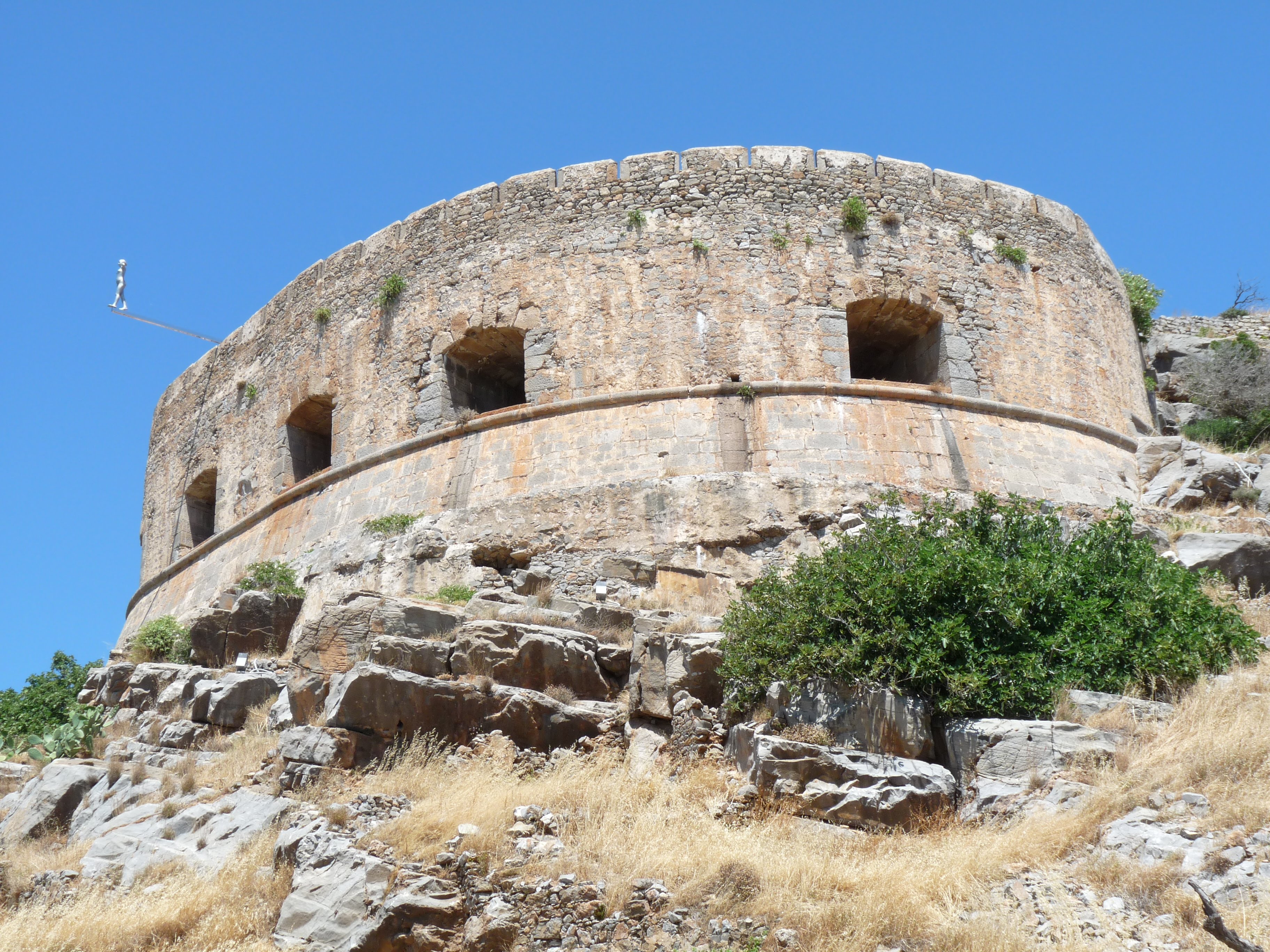
| A sculpture on the upper bastion depicting an inmate about to jump. In fact during its 54 years as a Leper Colony there were no suicides on the island and no visitors caught the disease. |
For more on the history of Spinalonga and tours of the area
see Victor Zorba’s website. He has written a history of the Island and has been
running tours for 25 years.